Manual Moss Removal vs. Chemical Treatment (What Works Best?)
Key Takeaways
- Manual removal clears moss immediately but is labor-intensive and can damage shingles if done incorrectly.
- Chemical treatments kill moss at the root and reduce regrowth, but must be applied safely to protect shingles and landscaping.
- A combined approach — manual removal plus professional chemical treatment — is often the most effective and long-lasting.
- Professional assessment is recommended for steep, shaded, or heavily mossed roofs typical in the Rogue Valley.
When it comes to roof moss, one of the biggest questions Southern Oregon homeowners face is: “Do I remove it myself, or use chemicals?” The most effective approach usually combines both methods — but understanding the pros, cons, and risks of each is key to protecting your roof.
Let’s break down the differences so you can make an informed decision that will ultimately extend the life of your roof, and not shorten it.
Manual Moss Removal (Hands-On, Careful, Labor-Intensive)
Before diving into the pros and cons, let’s take a closer look at what manual moss removal actually entails.
Manual removal is often the first option homeowners think of, but the effectiveness — and risk — comes down to technique, roof type, and how safely the work is done. For homeowners who’d rather avoid the guesswork (and the ladder), roof moss removal professionals can address the problem thoroughly while protecting shingles, flashing, and landscaping.
With that context, here’s what manual moss removal actually involves.
What It Involves
Manual moss removal is exactly what it sounds like: using soft brushes, scrapers, or specialized roof tools to physically lift moss off shingles. This approach works best for:
- Small patches
- Roofs with minimal slope
- Areas accessible without risking safety
Pros
- Immediate removal — you see results instantly.
- No harsh chemicals, safe for landscaping and runoff.
- Allows you to inspect your roof for hidden damage.
Cons
- Labor-intensive and time-consuming.
- Risk of damaging shingles if done incorrectly — scraping too hard or using the wrong tools can strip protective granules.
- Doesn’t prevent regrowth on its own.
The Asphalt Roofing Manufacturers Association (ARMA) notes that physical removal must be done carefully to avoid accelerating shingle wear.
Chemical Treatment (Targeted, Effective, Requires Care)
Next, let’s break down how chemical treatments work and what they involve.
What It Involves
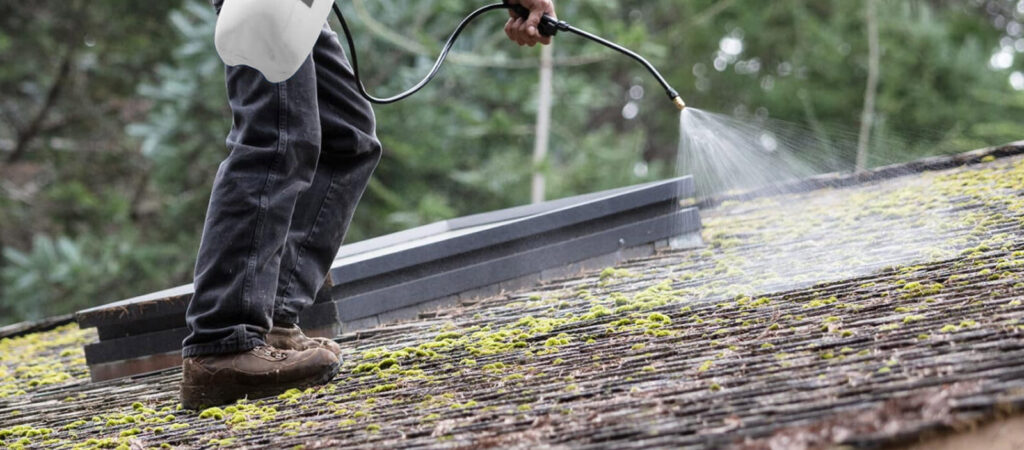
Chemical treatments typically use roof-safe solutions that kill moss at the root and prevent regrowth for months. Professional-grade treatments are designed to be biodegradable and safe for gutters, plants, and surrounding landscaping.
Pros
- Less labor-intensive than manual removal.
- Kills moss at the source, reducing the likelihood of rapid regrowth.
- Can reach areas that are physically hard to access, such as steep slopes or valleys.
Cons
- Some store-bought chemicals (like bleach) can damage shingles, harm plants, or enter stormwater runoff if not applied correctly.
- Results are not instant — it may take days or weeks for the moss to die and fall off.
- Improper use can void roof warranties or harm surrounding vegetation.
The EPA warns that harsh chemicals can damage plants, soil, and water systems, making safe application essential.
Why a Combined Approach Often Works Best
For most Southern Oregon roofs, the most effective strategy combines manual removal and chemical treatment:
- Manual removal clears thick mats of moss without over-relying on chemicals.
- Professional chemical treatment kills any remaining moss spores and helps prevent regrowth.
- This dual approach minimizes roof damage, protects landscaping, and extends shingle life.
For a complete guide to removal, prevention, and long-term care, see our full guide to roof moss removal and prevention.
Safety and Professional Considerations
Manual removal can be dangerous — slipping hazards, roof pitch, and ladder safety are all factors. Chemical treatments also require proper handling and application.
In many cases, hiring a professional is the safest way to ensure:
- Your roof remains undamaged
- Chemicals are applied safely
- Preventive measures are properly implemented
According to the National Roofing Contractors Association (NRCA), professional inspection and treatment are the most effective ways to maintain roof health and manage moss effectively.
FAQs
-
Yes, but it depends on your roof’s slope and condition. Manual removal works best on small patches or gently sloped roofs. Improper scraping or walking on steep roofs can damage shingles or be dangerous.
-
Professional-grade chemical treatments are designed to be roof-safe and environmentally friendly. Many store-bought chemicals, like bleach, can harm shingles, plants, and runoff if used incorrectly.
-
Manual removal gives immediate visual results, while chemical treatments may take several days or weeks to fully kill moss. The fastest, most reliable approach is usually a combination of both.
-
Most Southern Oregon homes benefit from roof inspections and moss management every 1–2 years. Shaded, tree-covered roofs may require more frequent attention.
-
Yes. Professionals safely combine manual and chemical methods, minimize roof and landscape damage, and help prevent regrowth — especially important for steep or heavily shaded roofs common in Southern Oregon.