What Shortens a Roof’s Lifespan in Southern Oregon?
Key Takeaways
- Roof lifespan is often shortened by gradual wear, not just major damage
- Moisture retention, moss, debris, and harsh cleaning all contribute to faster roof aging
- Southern Oregon roofs often deal with both damp shaded sections and strong sun exposure
- North-facing slopes and tree-covered areas usually age differently from sunnier sections
- Aggressive cleaning can shorten roof life even when it makes the roof look better at first
- Early maintenance matters most when it prevents repeat stress on the same roof areas
A roof does not usually fail because of one dramatic event.
More often, roofs wear down gradually because the same conditions keep working against them year after year. In Southern Oregon, that can mean moisture that lingers too long, moss and organic buildup, debris-heavy roof sections, strong sun exposure, or cleaning methods that do more harm than good.
That is why roof lifespan is not just about the age of the roof. It is also about what the roof has been exposed to, how it has been maintained, and whether small problems have been allowed to build over time.
This guide explains what commonly shortens roof lifespan in Southern Oregon, why some roofs age faster than others, and what homeowners should pay attention to if they want their roof to last longer.
Why Roof Lifespan Varies So Much From One Home to Another
Two homes in the same area can have roofs that age very differently.
That is because roof lifespan depends on more than installation date or roofing material. It also depends on how much shade the roof gets, how well it drains, how much debris it collects, whether organic growth is allowed to build up, and how the roof has been treated over time.
In Southern Oregon, it is common for one part of a roof to age faster than another. A shaded slope below tree cover may hold moisture longer, while a sunnier section may deal with more heat and UV exposure. Both can affect roof longevity, just in different ways.
Moisture Retention Is One of the Biggest Roof-Life Problems
One of the most common reasons roofs age faster is that certain sections stay damp too long.
Moisture retention is a problem because it gives organic buildup more time to develop and keeps roofing materials under longer periods of stress. A roof does not need to be leaking for moisture to be working against it.
This is especially common in areas like:
-
North-facing roof slopes
-
Shaded sections below trees
-
Valleys where debris collects
-
Lower-pitch areas that dry slowly
-
Roof transitions where runoff lingers
When parts of the roof stay wet longer than they should, those areas usually become the first places to show buildup, discoloration, and faster wear.
Moss and Organic Growth Speed Up Wear Over Time
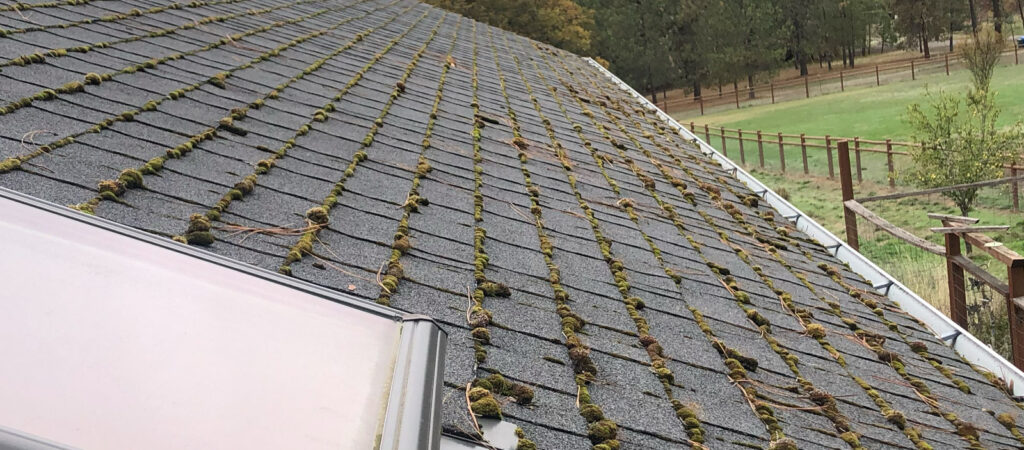
Moss is one of the clearest examples of something that can shorten roof life gradually.
It does not just sit on the roof surface. Over time, moss can trap moisture, hold debris in place, and create conditions that keep roof sections damp longer than they should be. That is one reason moss-heavy areas often seem to get worse faster instead of staying stable.
Organic growth can also include:
-
Algae staining
-
Lichen
-
Debris-heavy grime
-
Repeated buildup in shaded areas
The issue is not only appearance. It is that these conditions can keep a roof from drying efficiently and add stress to vulnerable sections year after year.
Debris Buildup Keeps the Wrong Areas Wet
Leaves, pine needles, small branches, and other roof debris do more than make a roof look neglected.
When debris collects in valleys, around chimneys, along lower edges, or near transitions, it tends to trap moisture and slow drainage. That means the roof stays wet longer and becomes more favorable for moss, staining, and repeated buildup.
This matters especially in homes with mature trees or roof sections that already struggle to dry out.
On many Southern Oregon homes, the real issue is not just that debris lands on the roof. It is the same areas that keep collecting debris again and again, which creates repeated stress on the same sections over time.
Aggressive Cleaning Can Shorten Roof Life Too
A roof can also wear out faster because of the wrong kind of maintenance.
This is one of the most overlooked ways a roof’s lifespan gets reduced. Homeowners often focus on getting the roof clean without realizing that methods like high pressure, hard scraping, or abrasive cleaning can damage the roof surface while removing buildup.
This is especially risky on:
-
Asphalt shingle roofs
-
Older roofs
-
Roofs with existing wear
-
Moss-covered sections
-
Textured or more delicate roofing surfaces
A roof may look cleaner right after aggressive cleaning, but that does not always mean it was cleaned in a way that protects its long-term condition.
In many cases, gentler, roof-safe maintenance is better for roof lifespan than forceful cleaning that produces faster visual results.
Southern Oregon Roofs Often Face Two Opposite Problems at Once
One reason roof longevity is tricky in Southern Oregon is that roofs often deal with both moisture-related wear and sun-related wear.
Some sections stay shaded, damp, and debris-prone. Other sections get stronger sun exposure and dry heat. That means the same roof may be aging for different reasons in different places.
Common local contributors include:
-
Seasonal moisture
-
Mature tree cover
-
North-facing roof slopes
-
Pine needles and organic debris
-
Strong summer sun
-
Repeating cycles of buildup followed by dry weather
That mix is part of why local roofs often need more thoughtful maintenance than homeowners expect.
Some Roof Sections Age Faster Than Others
Roofs rarely wear evenly.
Homeowners often notice that one slope looks dirtier, more worn, or more moss-prone than the rest. That pattern matters because it usually points to the conditions that are shortening roof life first.
Common faster-aging areas include:
-
Slopes below tree cover
-
Valleys that collect runoff and debris
-
Sections with recurring moss
-
Roof areas that stay darker after rain
-
Spots where buildup returns every year
These are often the best places to watch if the goal is to protect roof lifespan before broader deterioration sets in.
Delayed Maintenance Usually Costs More Than Early Maintenance
Most roof lifespan problems do not begin as emergencies.
They usually begin as manageable conditions that keep being postponed:
-
Debris that keeps collecting
-
Moss that starts small and spreads
-
Staining that gets heavier over time
-
Damp roof sections that never seem to dry quickly
-
Buildup that returns to the same problem spots
That is why early maintenance matters. It is not just about keeping the roof looking better. It is about reducing repeat stress before the same areas become harder to clean, harder to dry, or more vulnerable to wear.
What Actually Helps a Roof Last Longer
Homeowners cannot control every condition affecting a roof, but they can reduce some of the most common contributors to premature wear.
Helpful steps often include:
-
Addressing moss before it becomes thick and established
-
Keeping valleys and gutters clearer
-
Reducing heavy shade where practical
-
Watching repeat problem areas more closely
-
Avoiding aggressive cleaning methods
-
Using roof-safe maintenance suited to the roofing material
The goal is not perfect conditions. It is reducing the patterns that cause the same roof sections to stay wet, dirty, or stressed year after year.
What Homeowners Can Watch for From the Ground
You do not need to get on the roof to notice many of the conditions that shorten roof life.
From the ground, you can often look for:
-
Moss or dark buildup in shaded sections
-
Debris collecting in valleys or lower edges
-
Areas that stay damp-looking longer after rain
-
Uneven roof appearance from one slope to another
-
Sections below trees that keep looking dirtier faster
-
Repeat problem areas that return season after season
Those kinds of patterns are often more important than one isolated spot of discoloration.
Final Thought
A roof’s lifespan is usually shortened by repeated conditions, not just isolated problems.
In Southern Oregon, that often means moisture that lingers too long, moss and organic buildup, debris-heavy sections, and cleaning methods that are harder on the roof than they should be. When those patterns keep affecting the same areas year after year, roofs tend to age faster than homeowners expect.
If you want a roof to last longer, it usually helps to pay attention to the conditions that keep coming back — especially the ones that make parts of the roof stay wetter, dirtier, or more stressed than the rest.
For a broader look at safe roof care, see our roof cleaning service page. If your main concern is moss-related wear, it may also help to read about the early signs roof moss is damaging your roof.
FAQs
-
Some of the biggest factors that shorten a roof’s lifespan are moisture retention, moss growth, debris buildup, strong sun exposure, and aggressive cleaning methods that damage the roof surface.
-
Yes. Moss can shorten the life of a roof by trapping moisture, holding debris in place, and keeping parts of the roof damp longer than they should be.
-
Yes. Debris can contribute to roof damage by trapping moisture and slowing drainage, especially in valleys, shaded sections, and areas where buildup keeps returning.
-
Yes. Pressure washing can shorten roof life if it removes protective surface material, disturbs shingles, or cleans the roof too aggressively.
-
Some parts of a roof age faster because they get less sunlight, stay damp longer, collect more debris, or experience more recurring moss and organic growth than the rest of the roof.