How Often Should Rain Gutters Be Cleaned (in Southern Oregon)
Key Takeaways
- Understand why gutter cleaning is critical for roof, foundation, and landscaping health in Southern Oregon.
- Learn the general frequency recommendations for typical homes, tree-heavy properties, and multi-story homes.
- Discover how tree coverage, roof slope, and roof design affect cleaning schedules.
- Explore seasonal factors that influence how often gutters should be cleaned.
- Identify warning signs that indicate your gutters need cleaning before damage occurs.
- Get guidance on DIY vs professional gutter cleaning, including safety considerations and best practices.
For most homes in Southern Oregon, gutters should be cleaned at least twice per year. However, many properties — especially those with heavy tree coverage — require more frequent cleaning to prevent water damage, roof issues, and moss growth.
Southern Oregon’s mix of seasonal rain, wind, and native trees creates ideal conditions for gutter clogs. Understanding how often to clean your gutters depends on your property’s environment, not just a generic rule of thumb.
General Gutter Cleaning Recommendations
Before getting into specific timelines, it helps to understand why gutter cleaning frequency matters and how it fits into overall home protection. Our complete guide to gutter cleaning in Southern Oregon explains how clogs form, the risks of neglect, and how proper maintenance protects your roof, foundation, and landscaping.
For the average home:
- Minimum: 2 times per year (spring and fall)
- Tree-heavy properties: 3–4 times per year
- After major storms: Inspect immediately
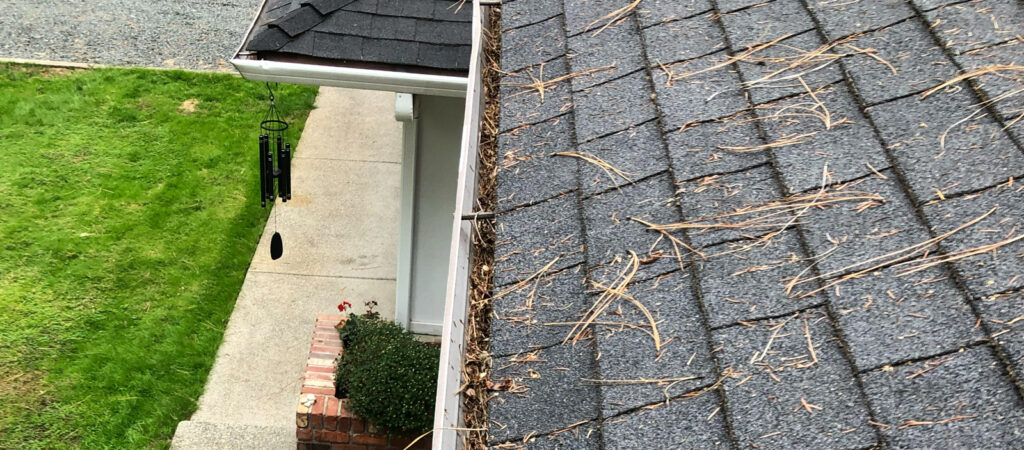
Homes surrounded by pine, oak, fir, or maple trees tend to accumulate debris much faster. Pine needles and small leaf fragments can bypass gutter guards and clog downspouts quickly.
If your home has recurring roof moss issues, gutter cleaning frequency often needs to increase. See our guide on what causes moss to grow on roofs for more context.
How Tree Coverage Affects Gutter Cleaning Frequency
Tree density is the single biggest factor in how often gutters should be cleaned.
Homes with minimal tree coverage
- Typically need cleaning twice per year
- Less debris buildup
- Lower risk of standing water
Homes with moderate tree coverage
- Often needs cleaning 3 times per year
- Fall debris accumulates quickly
- Spring pollen and seed pods can clog gutters
Homes surrounded by trees
- Usually needs cleaning 3–4 times per year
- Pine needles and leaves accumulate year-round
- Higher risk of gutter overflow and roof edge moisture
Southern Oregon homes near wooded areas or mature neighborhoods often fall into this last category. For related risks, see native trees and roof moss.
Roof Design and Gutter Cleaning Frequency
Your roof’s design also plays a role:
- Steeper roofs: Debris sheds faster but can pile up at gutter edges
- Low-slope roofs: Hold debris longer, increasing clog risk
- Complex rooflines: Valleys and corners funnel debris into gutters
Homes with roof moss already present should clean gutters more frequently, as moss debris often breaks loose and settles in gutters.
Seasonal Factors in Southern Oregon
Understanding Southern Oregon’s seasonal rainfall patterns is key to timing gutter maintenance effectively. According to Oregon State University Extension, the region’s wet winters and leafy spring debris create prime conditions for clogs and overflow, making seasonal cleaning especially important.
Southern Oregon’s climate makes seasonal timing especially important.
Fall
- Heavy leaf and needle drop
- Most important cleaning of the year
- Prevents winter overflow and roof edge saturation
Winter
- Less debris falls, but clogs are more damaging
- Standing water can back up under shingles
- Gutters should be inspected after storms
Spring
- Clears winter debris
- Prepares gutters for seasonal rain
- Reduces moisture retention along roof edges
Summer
- Windstorms can deposit needles and branches
- Best time for inspections rather than full cleanings
For a month-by-month overview, see this 1-year moof maintenance calendar.
What Happens If Gutters Aren’t Cleaned Often Enough
Understanding the risks of neglecting gutter maintenance helps homeowners see why consistent cleaning is more than just a chore. Infrequent cleaning can allow debris and water to build up, creating problems that grow over time.
Infrequent gutter cleaning can lead to:
- Water overflowing onto the siding and landscaping
- Rotting fascia boards
- Foundation moisture problems
- Increased roof moss growth
- Shortened roof lifespan
When gutters become clogged, they can lead to serious problems like leaks and sagging, making roof damage from clogged gutters a common concern for homeowners.
A Simple Rule of Thumb
If you’re unsure how often to clean your gutters, follow this guideline:
- Few trees nearby: Clean twice per year
- Several nearby trees: Clean three times per year
- Dense tree coverage or recurring moss: Clean four times per year
This approach balances prevention with cost and effort.
Professional vs DIY Considerations
DIY gutter cleaning can work for single-story homes with safe access. However, multi-story homes, steep roofs, or moss-covered roof edges increase safety risks.
Professional cleaning ensures:
- Full debris and downspout clearing
- Safer access
- Early detection of roof or gutter problems
It’s also helpful to consider the differences between DIY gutter cleaning vs professional service, as each approach comes with its own benefits, risks, and maintenance requirements.
Conclusion
In Southern Oregon, gutter cleaning frequency depends heavily on trees, roof design, and seasonal weather. While twice per year is a minimum for most homes, many properties benefit from more frequent maintenance.
Regular gutter cleaning protects your roof, reduces moss growth, and helps extend the life of your home.
Protect your roof and home with regular gutter care. Contact us or request a quote, and we’ll come out to evaluate your gutters and provide a plan that works for your home.
FAQs
-
Most homes with pine trees need gutter cleaning 3–4 times per year due to constant needle drop.
-
Yes. Clear gutters allow roof edges to dry faster, reducing the moisture moss needs to grow.
-
It’s the minimum, but homes with trees or shaded roofs often need more frequent cleaning.