What Happens If You Don’t Clean Your Gutters? (The Damage Usually Starts Here)
Key Takeaways
- Gutter neglect usually causes damage gradually, not all at once
- Roof edges, fascia boards, siding, and foundation areas are often the first places affected
- Overflowing gutters can lead to repeated moisture exposure in the same problem spots
- The most serious issues often start as small drainage failures that keep repeating
- Many warning signs are visible from the ground before major repair work is needed
- Gutter cleaning helps prevent water from sitting where it should be draining away
Gutters are easy to ignore until they stop doing their job.
At first, the problem may just look like leaves, needles, or standing water in the trough. But once gutters stay clogged long enough, the real issue is not the debris itself. It is what happens when water no longer drains away from the house the way it should.
That is when damage usually begins.
And in many cases, it does not start with one dramatic failure. It starts gradually — with repeated overflow, wet roof edges, soaked fascia, siding splashback, and water collecting in the wrong places every time it rains.
This guide explains what usually happens if you do not clean your gutters, where the damage tends to begin, and what homeowners should watch for before a small drainage problem turns into a larger repair issue.
Why Dirty Gutters Become a Bigger Problem Than Most Homeowners Expect
A clogged gutter is not just a gutter problem.
Once water cannot move through the gutter and downspout properly, it starts finding other paths. It may spill over the front edge, run behind the gutter, soak the fascia, splash against siding, or dump too much water next to the foundation.
That repeated overflow is what causes trouble.
If it only happened once, the risk would be lower. But when the same section overflows again and again through rainy periods, the surrounding parts of the house start taking on water stress they were never meant to handle.
That is why the damage from neglected gutters usually builds up over time.
The Damage Usually Starts at the Roof Edge
One of the first places where gutter neglect starts causing trouble is along the lower edge of the roof.
When gutters are packed with debris, water can back up or linger too long near the eaves instead of draining away quickly. That keeps the roof edge wetter than it should be and can create repeated moisture exposure in the same vulnerable sections.
Homeowners may start to notice:
-
Dark staining near the roof edge
-
Debris packed into the lower roof sections
-
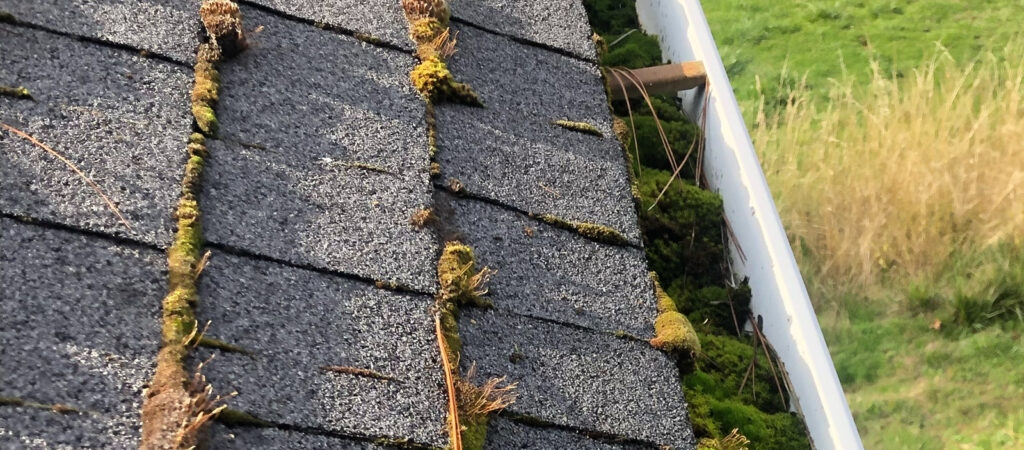
Moss or organic buildup near the eaves
-
Roof edges that stay damp longer after rain
This is one reason gutter problems and roof problems are so closely connected. The gutter may be the part that is clogged, but the roof edge often feels the effects first.
Fascia Damage Often Comes Next
Once gutters overflow repeatedly, fascia boards often become one of the next trouble areas.
The fascia is the trim board behind the gutter along the roofline. When water spills over or behind the gutter often enough, the board can stay wet too long and too often.
Over time, that may lead to:
-
Paint failure
-
Wood staining
-
Soft spots
-
Rot
-
Weakening where gutters are attached
This kind of damage is common because the fascia sits directly in the path of roof-edge overflow problems. What started as trapped gutter debris can become wood deterioration along the roofline.
Siding and Exterior Walls Start Taking More Water Than They Should
Overflowing gutters do not just affect the roof edge.
When water spills over the side of the gutter instead of moving into the downspout, it often runs down the exterior of the home. That can lead to repeated moisture exposure on:
-
Siding
-
Trim
-
Window areas
-
Painted surfaces
-
Lower wall sections near splash zones
At first, this may show up as staining, dirt tracks, or peeling paint. Over time, it can create more serious wear on surfaces that were meant to stay much drier than they are.
In other words, uncleaned gutters do not just move the water problem downward. They spread it.
Foundation and Crawl Space Problems Can Follow
One of the biggest risks with neglected gutters is what happens below the roofline.
If water is not being directed away from the house properly, it often ends up collecting too close to the foundation. That can increase moisture around the base of the home and contribute to issues in places like:
-
Crawl spaces
-
Basement-adjacent foundation walls
-
Lower slab edges
-
Soil around the footing area
This is especially important when downspouts are clogged, disconnected, or overwhelmed by overflow.
A lot of homeowners think of gutters as a roof feature, but they are really part of the home’s entire water-management system. Once they stop working, the consequences can travel all the way to the foundation.
Neglected Gutters Can Make Roof-Edge Moss and Buildup Worse
Dirty gutters also create better conditions for moisture-related growth near the lower roof edge.
When water drains slowly, backs up, or keeps lower sections damp, the roof edge becomes a more favorable place for:
-
Moss
-
Algae
-
Organic buildup
-
Debris-heavy grime
This does not mean clogged gutters always create roof moss by themselves. But they can absolutely help make lower roof sections wetter and dirtier, especially when tree cover and shade are already part of the picture.
That is one reason some homes develop recurring moss or staining near the eaves first.
The Same Areas Usually Keep Getting Worse
One reason gutter neglect causes so much damage is that it rarely affects the whole house evenly.
Instead, the same trouble spots usually keep taking the hit:
-
One overflowing corner
-
One sagging gutter section
-
One downspout that never clears well
-
One roof edge below heavy tree cover
-
One side of the house where the splashback keeps happening
That repeated pattern is what turns a manageable maintenance issue into a repair issue.
A single overflow event may not cause much harm. But months or seasons of water hitting the same place over and over can create much more serious wear.
Warning Signs You Have Waited Too Long
Homeowners often get warning signs before gutter neglect turns into major damage.
Common clues include:
-
Gutters overflowing during rain
-
Water spilling behind the gutter
-
Sagging or visibly loaded gutter sections
-
Dark roof-edge staining
-
Soft or peeling fascia
-
Dirty streaks on siding
-
Moss or buildup near the eaves
-
Water collects too close to the home after rain
These signs do not always mean severe damage is already present. But they usually do mean the gutter system is no longer managing water the way it should.
Why the Damage Is Easy to Underestimate
A lot of gutter-related damage starts in ways that do not seem urgent.
Homeowners may think:
-
the gutters just need to be cleaned later
-
that one overflowing corner is not a big deal
-
the stain on the fascia is only cosmetic
-
water always splashes a little during storms
Sometimes those assumptions feel reasonable in the moment. The problem is that repeated overflow turns minor-looking symptoms into repeated wetting cycles, and repeated wetting is what causes the real wear.
That is why gutter neglect is so easy to underestimate until the damage becomes more obvious.
What Homeowners Can Check From the Ground
You do not have to climb a ladder to spot many of the early signs.
From the ground, you can often check for:
-
Overflow during rain
-
Sagging gutter lines
-
Debris sticking up from gutters
-
Stained fascia or trim
-
Dark roof-edge areas
-
Dirty splash marks on the siding
-
Water pooling near the foundation
-
Moss or buildup near the lower roof edges
Watching the home during or just after rain is often one of the easiest ways to see whether the gutter system is actually carrying water the way it should.
What Usually Prevents the Damage From Getting Worse
The biggest difference usually comes from correcting the drainage issue before the same overflow pattern repeats for another season.
That often means:
-
Clearing gutters and downspouts so water can move properly
-
Watching repeat overflow areas more closely
-
Addressing sagging or poorly draining sections
-
Paying attention to roof-edge staining and fascia wear
-
Taking visible overflow seriously before it becomes structural damage
The sooner the water starts draining the way it should again, the better the chance of preventing the next layer of problems.
Final Thought
If you do not clean your gutters, the damage usually does not begin with one dramatic failure.
It usually starts where water is forced to go instead: along the roof edge, into the fascia, down the siding, and too close to the foundation. The longer the overflow pattern repeats, the more likely those areas are to show wear.
That is why clogged gutters are rarely just a gutter issue for long. Once drainage breaks down, the rest of the house starts dealing with the consequences.
For a broader look at local gutter care, see our gutter cleaning guide. If your main concern is how drainage issues affect the roofline, it may also help to read about how gutter problems damage roofs.
FAQs
-
If you do not clean your gutters, they can overflow, back up water along the roof edge, soak fascia, stain siding, and send too much water too close to the foundation.
-
Yes. Dirty gutters can damage a roof by keeping lower roof edges wetter for longer and contributing to roof-edge wear, staining, and moisture-related buildup.
-
Yes. Clogged or overflowing gutters can soak the fascia board behind the gutter, which can lead to soft wood, staining, and rot over time.
-
Yes. Neglected gutters can contribute to foundation problems when water overflows or drains too close to the home instead of being carried safely away.
-
Common signs include overflow during rain, sagging gutters, stained fascia, dirty siding streaks, moss near the eaves, and water pooling near the foundation.