How Gutter Problems Damage Roofs (Shingles, Fascia, Moss, and Leaks)
Key Takeaways
- Gutter problems can damage roofs by trapping water where it should drain away
- Roof-edge shingles, fascia boards, and eaves are often the first areas affected
- Overflowing gutters can contribute to leaks, rot, and moss-prone roof sections
- Poor gutter slope and installation can create repeated moisture problems, even if the gutters are not visibly clogged
- Gutter-related roof damage often begins gradually, not all at once
- Early signs are often visible from the ground if homeowners know what to look for
Gutters are easy to think of as a separate maintenance issue until they start causing roof problems.
That is when homeowners realize clogged, overflowing, or poorly functioning gutters do more than spill water over the edge of the house. They can keep roof edges wet, back water into vulnerable areas, rot fascia, encourage moss growth, and create the kind of moisture problems that often lead to larger repairs later.
This is especially important in Southern Oregon, where seasonal rain, tree debris, and shaded roof sections can make gutter-related roof damage build gradually over time.
This guide explains how gutter problems damage roofs, where that damage often starts, and what homeowners should watch for before the issue spreads.
Why Gutter Problems Affect the Roof First
A gutter system is meant to move water away from the roof edge quickly and predictably.
When that system stops working properly, the first area to feel the effects is often the part of the roof closest to the gutter line. Water may start backing up, overflowing, dripping where it should not, or sitting too long near the eaves.
That does not always create immediate, dramatic damage. More often, it creates repeated wet conditions in the same vulnerable areas until wear starts becoming visible.
This is why gutter problems so often turn into roof-edge problems first.
How Clogged Gutters Can Damage Shingles
One of the most common ways gutters damage roofs is by causing water to back up along the lower roof edge.
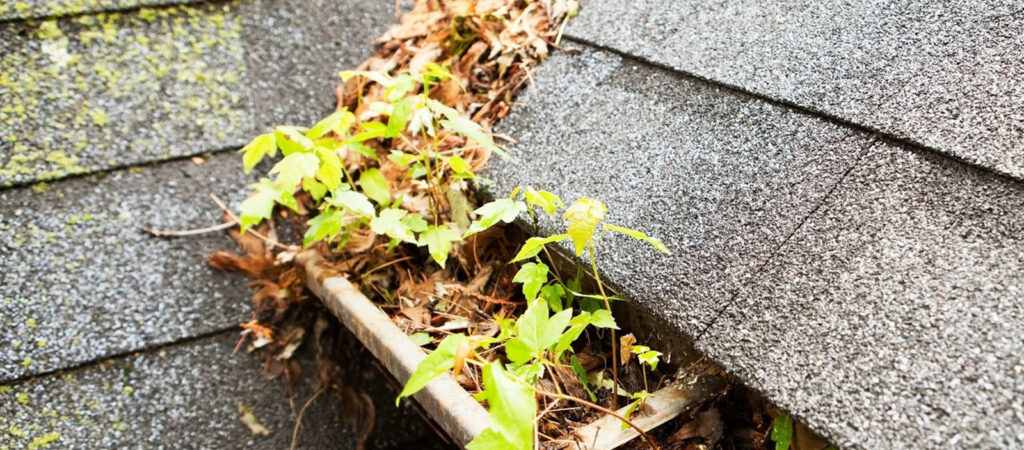
When gutters are clogged with leaves, needles, or heavy debris, rainwater cannot move through the system as intended. Instead, it may begin to pool, overflow, or sit longer at the edge of the roof.
Repeated moisture can affect shingles by:
-
Keeping the lower edges wetter for longer
-
Increasing wear near the eaves
-
Contributing to the buildup below debris-heavy sections
-
Creating conditions that make roof edges more vulnerable over time
This kind of damage often starts subtly. Homeowners may first notice dark staining, debris-packed roof edges, or roof sections that stay damp longer after rain.
How Overflowing Gutters Lead to Fascia Rot
When gutters overflow repeatedly, the water does not just disappear harmlessly.
A common result is that it spills over or behind the gutter and soaks the fascia board — the wood trim directly behind the gutter along the roofline. Over time, that repeated wetting can lead to:
-
Wood staining
-
Paint failure
-
Soft or deteriorating fascia
-
Rot near the gutter attachment points
-
Structural weakening at the roof edge
Fascia damage is one of the clearest examples of how a gutter issue becomes a roof-adjacent repair issue. What starts as poor drainage can turn into wood damage at the edge of the roofing system.
How Gutter Problems Contribute to Roof Leaks
Not every roof leak starts in the middle of the roof.
Some begin because gutter problems repeatedly force water into areas that were never meant to stay saturated.
This can happen when:
-
Water backs up along the lower roof edge
-
Overflow keeps soaking the same sections repeatedly
-
Poor drainage affects flashing or roof-edge transitions
-
Moisture lingers near eaves and vulnerable joints
In these cases, the gutter issue is not just a nuisance below the roofline. It becomes part of the reason water is repeatedly stressing the roof system itself.
That is one reason some roof leaks are really drainage problems first.
How Poor Gutter Slope and Installation Create Repeated Damage
Gutters do not need to be packed with debris to create roof problems.
Sometimes the issue is that the gutters are not draining properly because of poor slope, poor placement, loose sections, or installation problems that prevent water from moving efficiently.
That can lead to:
-
Standing water in sections of the gutter
-
Persistent overflow in specific areas
-
Repeated wetting near the same roof edge
-
Uneven drainage that keeps one section of the eave wetter than the rest
This matters because repeated roof-edge moisture does not always come from obvious clogs. It can also come from technically open gutters, but still not carrying water the way they should.
How Gutter Problems Encourage Moss at the Roof Edge
Gutter issues can also make roof moss more likely in certain areas.
When lower roof sections stay wetter because of clogged or slow-draining gutters, the roof edge may become a more favorable place for moss, algae, and organic buildup to develop.
This is especially common when the home also has:
-
Shade from nearby trees
-
Debris collecting at the lower edges
-
North-facing sections
-
Roof slopes that already dry slowly
In these situations, the gutter problem helps create the moisture pattern that moss needs to take hold more easily.
Where Gutter-Related Roof Damage Usually Shows Up First
Gutter-related roof damage is usually not random.
It tends to show up first in places like:
-
Lower roof edges
-
Fascia boards
-
Eaves
-
Valleys feeding into overloaded gutters
-
Roof sections below heavy tree cover
-
Areas where overflow happens repeatedly
This is useful because homeowners do not need to inspect every inch of the roof to watch for early signs. Often, the same sections will show stress first if the drainage problem keeps repeating.
What Homeowners Can Look for From the Ground
Many gutter-related roof problems start gradually enough that the clues are visible before major repairs are needed.
From the ground, homeowners can often look for:
-
Gutters overflowing during rain
-
Water spilling behind the gutter instead of through the downspout
-
Dark staining near the roof edge
-
Sagging gutter sections
-
Soft-looking or stained fascia
-
Debris packed into gutters or lower roof edges
-
Moss or heavy organic buildup near the eaves
-
Roof sections that stay wet longer than nearby areas
These signs do not always mean major damage is already present. But they do often mean the roof edge is under more moisture stress than it should be.
Why Gutter Problems Often Get Misdiagnosed
One reason these issues get overlooked is that homeowners may notice the roof symptom before they recognize the gutter cause.
They may see:
-
Staining near the eaves
-
Moss starts along the roof edge
-
Peeling paint on the fascia
-
Water marks near the roof transitions
-
Soft wood near the gutter line
Without thinking much about the gutter system, it is easy to assume the problem is only a roofing issue. But in many cases, the drainage problem is what keeps creating the conditions that allow the roof damage to continue.
Why This Matters in Southern Oregon
Southern Oregon homes often deal with a combination of seasonal rain, mature trees, needles, leaves, and shaded roof sections that make gutter performance especially important.
When gutters repeatedly collect debris or drain unevenly, the roof edge may stay wetter longer than it should. Over time, that can contribute to:
-
Roof-edge wear
-
Fascia deterioration
-
Moss-prone lower slopes
-
Leak risk near the eaves
-
Repeated trouble in the same areas year after year
That is why gutter problems here are rarely “just gutter problems.”
What Usually Prevents the Damage From Getting Worse
The biggest protection is not waiting until damage becomes obvious.
That usually means:
-
Keeping gutters clear enough to drain properly
-
Watching repeat overflow areas more closely
-
Addressing sagging or poorly draining sections
-
Paying attention to the lower roof edges below heavy tree cover
-
Taking roof-edge staining or fascia deterioration seriously
The earlier the drainage issue is corrected, the better chance the roof system has of avoiding repeated moisture stress in the same vulnerable areas.
Final Thought
Gutter problems damage roofs by keeping water where it should not stay.
When gutters clog, overflow, sag, or drain poorly, the roof edge often becomes the first place to show the effects. That can lead to wet shingles, fascia rot, moss-prone lower slopes, and even leaks that seem like roofing problems but start with poor drainage.
If the same roof-edge areas keep looking wet, stained, debris-heavy, or moss-prone, the gutter system may be part of the reason.
For a broader look at local gutter maintenance, see our gutter cleaning guide. If your main concern is roof-edge moisture and organic growth, it may also help to read about the early signs roof moss is damaging your roof.
FAQs
-
Yes. Clogged gutters can damage a roof by backing water up along the lower roof edge and keeping vulnerable sections wetter for longer.
-
Gutter problems can cause roof leaks by forcing water into roof-edge areas, eaves, or transitions that are not meant to stay saturated repeatedly.
-
Yes. Overflowing or poorly draining gutters can soak the fascia board behind the gutter, which can lead to staining, soft wood, and rot over time.
-
They can. Gutter problems can keep lower roof sections wetter, which creates better conditions for moss and organic buildup near the eaves.
-
Gutter-related roof damage usually starts near the lower roof edge, fascia, eaves, or other areas where water backs up or overflows repeatedly.