Hard Water Spots on Windows – What Works, What Doesn’t, and What Might Be Permanent
Key Takeaways
- Hard water spots are mineral deposits left behind when water dries on the glass.
- In Southern Oregon, sprinkler overspray is one of the most common causes.
- Light to moderate hard water spotting can often be improved or removed.
- Older spots may bond to the glass and become much harder to clean.
- Some “spots” are actually etching, which means the glass itself has been damaged.
- The longer the mineral buildup sits, the more likely it is to become partly permanent.
Hard water spots are one of the most frustrating window problems homeowners deal with. Some come off with normal cleaning. Others keep coming back. And some have been sitting on the glass long enough that they start to leave permanent damage behind. This guide explains what hard water spots actually are, what usually causes them in Southern Oregon, what can often be improved, and when the glass may already be etched.
What Hard Water Spots on Windows Actually Are
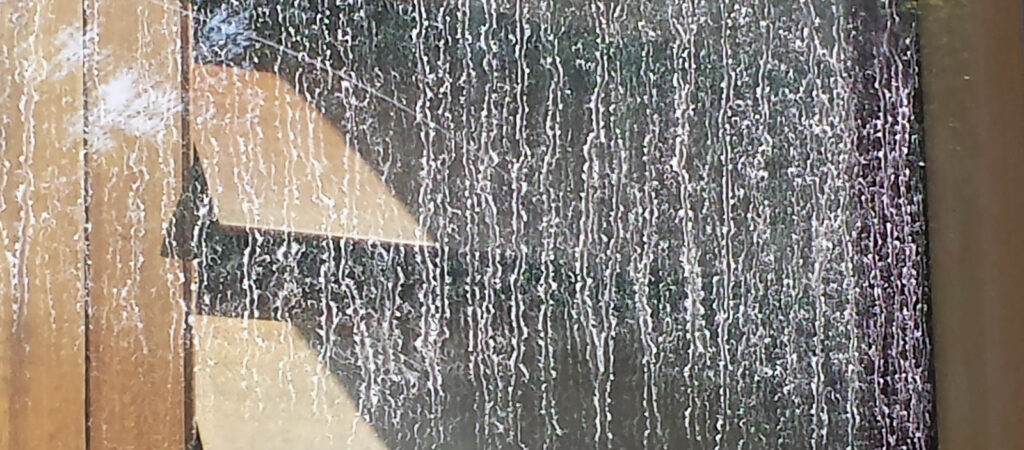
Hard water spots are not just ordinary dirt. They are mineral deposits left behind after water evaporates on the glass. When that water contains minerals like calcium and magnesium, those minerals stay behind and gradually build up.
At first, the spots may look like:
-
faint cloudiness
-
small white dots
-
hazy drip patterns
-
dull patches on the glass
Over time, those deposits can become more noticeable, more stubborn, and harder to remove with normal cleaning.
This is why homeowners often feel like they cleaned the windows but the glass still does not look right.
Why Hard Water Spots Are So Common in Southern Oregon
Hard water spotting is especially common in Southern Oregon because many homes deal with repeated water exposure during the dry season. Once windows are hit over and over by sprinkler mist, hose spray, or runoff, the mineral deposits start to build.
Sprinkler Overspray
This is one of the most common causes by far.
When irrigation mist repeatedly hits the same windows, it leaves behind small mineral deposits every time it dries. At first, the spotting may seem minor. But after weeks or months, the buildup becomes more obvious and harder to ignore.
Homes with landscaping close to the house often deal with this issue the most. If that sounds familiar, our article on Sprinkler Overspray on Windows explains why the spots keep coming back and what helps slow it down.
Repeated Water Exposure
Even without sprinklers, windows can spot from repeated exposure to water from:
-
hoses
-
roof runoff
-
splashing near patios and walkways
-
exterior cleaning that leaves mineral-heavy water behind
-
misting near landscaping
The more often the glass dries with minerals on it, the more likely the spotting becomes noticeable.
Time and Neglect
Hard water spots usually get worse the longer they sit. What could have been a manageable cleanup earlier may become much more stubborn if it is allowed to bake on through heat, sun, and repeated deposits.
This is one reason routine maintenance matters more than many homeowners realize.
What Hard Water Spots Look Like
Hard water spots do not always look dramatic at first. In many cases, they show up more clearly when:
-
the sun hits the glass at an angle
-
you look across the window instead of straight through it
-
the rest of the window has already been cleaned
-
the glass gets wet and then dries again
Common signs include:
-
white spotting
-
cloudy film
-
patterned residue
-
circular marks where water dried
-
windows that look dull even after cleaning
Some homeowners describe it as a haze. Others describe it as “ghost spots” that never seem to go away.
The Difference Between Dirt, Residue, and Hard Water Staining
Not every spotted window has the same problem.
Ordinary Dirt and Dust
Basic dirt, dust, and pollen usually come off with routine window cleaning. They may dull the glass, but they do not typically bond to it the same way mineral deposits do.
Surface Residue
Some windows have residue from smoke film, pollen, or other buildup that can leave a hazy appearance without being true hard water staining.
For more on that issue, see Smoke Film on Windows After Wildfire Season.
Mineral Deposits
Hard water spots are a different category because the minerals stay behind after the water dries. That buildup can start as surface spotting and become more stubborn with time.
Etching
Etching is where the damage goes beyond removable residue. The minerals have sat long enough or reacted strongly enough that the glass surface itself has been affected. At that point, the problem is no longer just “something on the glass.” The glass has been damaged.
That is when expectations need to change.
What Works for Hard Water Spots
The answer depends on how old and severe the spotting is.
Routine Cleaning for Light Spotting
If the spotting is still fairly light, standard window cleaning may improve it significantly. This is especially true when the buildup has not been sitting on the glass for a long time.
In these cases, the issue may still be mostly surface-level.
Our Window Cleaning service page explains how standard residential window cleaning can help with spotting when needed.
More Targeted Cleaning for Mineral Buildup
Once the spotting is more noticeable, the glass may need more attention than a quick wash. This is where technique and expectations matter. Some windows respond well and clean up nicely. Others improve only partially.
This is one reason homeowners sometimes feel disappointed after trying to clean the glass the same way they always do. Mineral buildup is not the same as ordinary grime.
Catching It Earlier
One of the most effective things homeowners can do is address hard water spotting earlier instead of waiting until it becomes severe. Light buildup is usually much easier to deal with than deposits that have baked on for months or years.
What Usually Doesn’t Work Well
A lot of hard water frustration comes from treating the problem like ordinary dirt.
Repeating the Same Basic Cleaning
If the spots did not come off with a normal cleaning the first time, repeating that same exact approach often will not solve the issue. The problem is not always lack of effort. It is often the type of buildup.
Assuming Every Spot Is Fully Reversible
Some hard water spots are removable. Some are only partly improvable. Some are permanent because the glass has already been etched.
That distinction matters. It is one of the biggest reasons honest expectations are so important.
Ignoring the Cause
Even if the spots are cleaned up, they often return quickly if the source is still there. Homes with active sprinkler overspray are a good example. The windows may look better for a while, but the spotting often comes back unless the overspray pattern changes.
What Might Be Permanent
This is the part many homeowners are not told clearly enough.
Some hard water problems are no longer just deposits sitting on the surface. Over time, mineral buildup can damage the glass itself. When that happens, the glass may still improve with cleaning, but it may never return to a clear, like-new appearance.
Signs the issue may be partly permanent include:
-
The spots remain visible after repeated cleaning
-
The glass still looks cloudy in certain light
-
The marks seem embedded rather than on the surface
-
The window improves, but not completely
That does not mean cleaning is pointless. It means the goal may shift from full removal to meaningful improvement.
How to Tell If the Glass May Be Etched
Etching is not always easy for a homeowner to identify, but there are a few clues.
The glass may be etched if:
-
The window still looks stained after good cleaning
-
The marks appear locked into the surface
-
The spotting has been there for a very long time
-
The glass has had repeated sprinkler exposure over multiple seasons
-
The haze is more visible from certain angles, even when the surface is clean
In these situations, the best approach is to be realistic. Some windows can improve a lot without becoming perfect.
Why Hard Water Spots Keep Coming Back
Even when the glass cleans up well, hard water spots can return if the cause remains.
The most common example is repeated sprinkler overspray. If irrigation water keeps hitting the same windows, the mineral deposits build up again, and the cycle continues.
Other reasons they return include:
-
Poor drainage or splashback
-
Repeated water runoff
-
Infrequent maintenance
-
Leaving windows exposed to mineral-heavy water during hot, dry periods
This is why prevention matters almost as much as cleaning.
How to Slow Hard Water Spotting Down
You may not be able to prevent all spotting, but you can often reduce how quickly it builds.
Adjust Sprinklers
If irrigation is hitting the windows, changing the spray direction or coverage pattern can help a lot.
Clean the Glass Before Buildup Gets Heavy
Routine maintenance is usually easier and more effective than waiting until the spotting becomes severe.
For a general schedule, see How Often You Should Clean Windows in the Rogue Valley.
Pay Attention to Problem Windows
Some windows spot much faster than others. These are often the windows near landscaping, patios, side yards, or areas where water repeatedly hits the same glass.
Address the Cause, Not Just the Symptom
If the spotting keeps returning, it is worth looking at the water source rather than just repeating the cleaning.
When Professional Window Cleaning Makes Sense
Professional help usually makes more sense when:
-
The spots are no longer coming off with routine cleaning
-
The windows have a heavy buildup
-
The source of the spotting is ongoing
-
The glass needs more careful attention
-
The homeowner wants a realistic opinion about what can improve and what may be permanent
In many cases, the value is not just in the cleaning itself. It is in getting honest expectations.
For a broader overview, see Window Cleaning in Southern Oregon.
Is Hard Water Spot Removal Always Included?
Not always in the same way.
Some light to moderate spotting can often be addressed as part of standard window cleaning when needed. But more severe mineral buildup may take additional time and may change the expectations for the job.
That is one reason scope matters so much. If hard water spotting is part of the problem, it helps to mention it up front when getting a quote.
You can also see how this affects labor in Cost to Clean Windows in Southern Oregon.
When It’s Better to Focus on Improvement Instead of Perfection
This is often the most honest way to think about older hard water issues.
If the glass has been exposed to mineral-heavy water for a long time, the best realistic outcome may be a noticeable improvement rather than total removal. That can still make a major difference in how the windows look.
For many homeowners, better clarity, less haze, and a cleaner overall appearance are still worth it even if some older marks remain.
FAQs
-
Hard water spots are caused by mineral deposits left behind after water dries on the glass. In Southern Oregon, sprinkler overspray is one of the most common sources.
-
Often, yes. Light to moderate spotting can often be improved or removed, especially if it has not been sitting on the glass for too long.
-
Sometimes. If the buildup has been there long enough to etch the glass, some of the damage may be permanent.
-
The spots may be mineral deposits rather than ordinary dirt, or the glass may already be etched. In those cases, routine cleaning may not fully solve the problem.
-
They can if the source is still there. Sprinkler overspray is one of the most common reasons windows spot again quickly.