5 DIY Roof Moss Removal Myths (Don’t Do These)
Key Takeaways
-
Many DIY roof moss fixes make the roof look better before they actually solve the problem
-
Brown or dead-looking moss does not always mean it has been fully removed
-
Pressure washing, scraping, and harsh treatments can damage shingles
-
Moss often returns when shade, debris, and moisture are left unaddressed
-
DIY mistakes can shorten roof life even when the damage is not obvious right away
-
A roof-safe approach focuses on both removal and prevention
If you have moss on your roof, it is easy to understand the temptation to handle it yourself.
A quick search turns up all kinds of DIY advice — vinegar sprays, homemade treatments, pressure washing, brushing, scraping, and “easy” weekend fixes. Some of these methods may seem to help at first. The roof may even look cleaner for a little while.
But that does not always mean the problem was solved safely.
On many Southern Oregon roofs, DIY moss removal goes wrong for one of two reasons: either the method damages the roofing material, or it only addresses the visible moss while leaving behind the conditions that caused it to grow in the first place.
This guide covers common DIY roof moss removal mistakes, what can go wrong, and what homeowners should do instead.
Why DIY Moss Removal Goes Wrong So Often
Most homeowners are not trying to cut corners. They are trying to avoid damage, save money, and take care of their roof.
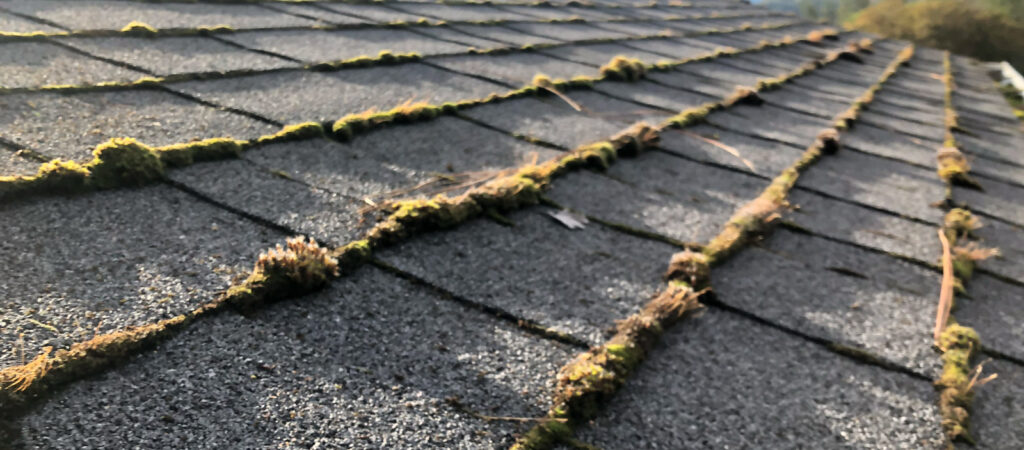
The problem is that moss is rarely just sitting loosely on the surface. On many roofs, especially older composition roofs, moss settles into textured areas, shingle edges, and moisture-prone sections. That makes it easy to underestimate how much force, moisture, or abrasion a roof can handle during cleaning.
The result is often one of these outcomes:
-
The moss dies, but the roof is left rough, worn, or patchy
-
The moss is partly removed, then grows back in the same spots
-
The roof looks cleaner from the ground, but debris and root material are still present
-
The homeowner creates a safety risk by walking on a slippery roof
That is why DIY moss removal often sounds simpler online than it turns out to be in real life.
Mistake 1: Spraying Vinegar or DIY Mixes Without Considering the Roof Surface
One of the most common DIY approaches is using vinegar or a homemade moss-killing mix.
The thinking is simple: if it kills moss on patios or sidewalks, it should work on a roof too. But roofing materials are different. What works on hardscape surfaces is not automatically a good fit for shingles.
The issue is not just whether the moss turns brown. It is whether the treatment is appropriate for the roof, whether runoff could affect nearby surfaces or landscaping, and whether the application solves anything beyond the visible growth.
On some roofs, homeowners end up with dead moss still stuck in place, uneven-looking treated areas, or regrowth because the underlying moisture conditions were never addressed.
A roof-safe treatment plan should consider the roofing material, the amount of moss present, and what happens after the moss dies.
Mistake 2: Thinking Brown Moss Means the Roof Is Fine
This is one of the most misleading DIY results.
A homeowner applies a treatment, the moss turns brown, and it looks like the problem is solved. But brown moss is not the same as removed moss.
Dead moss can still:
-
Sit in valleys and drainage paths
-
Hold debris in place
-
Stay packed into the shingle edges
-
Interfere with drying
-
Leave the roof looking cleaner from a distance while problem material remains
On local roofs, this is one of the most common reasons moss seems to “come back quickly.” In many cases, it never fully left. It just changed color before loosening or regrowing.
A treatment may be one part of the process, but it is not always the finish line.
Mistake 3: Pressure Washing Because It Looks Fast
Pressure washing often seems like the fastest way to get dramatic results.
And visually, it can be. Moss disappears quickly, and the roof may look much cleaner right away. The problem is that speed is not the same as safety.
On composition and asphalt roofs, pressure washing can disturb granules, force water where it should not go, and shorten the life of the roofing material. Even when the roof does not look obviously damaged from the driveway, the cleaned area may be left more vulnerable than before.
This is especially risky on older roofs, roofs with already-worn shingles, or any roof with sections that stay damp for long periods.
Fast results are appealing, but an aggressive cleaning method can create a more expensive problem than the moss itself.
Mistake 4: Scraping Moss Off by Hand and Damaging the Shingles
Another common mistake is manual scraping.
Homeowners often assume that if they work carefully enough, they can remove the moss without harming the roof. Sometimes they can reduce visible growth. But moss does not always come off cleanly, especially once it is established.
Scraping can:
-
Disturb shingle edges
-
Remove protective granules
-
Leave rough patches behind
-
Create uneven-looking sections on the roof
-
Break fragile areas on older roofs
On many composition roofs, the damage is subtle at first. The roof may appear slightly rougher or more worn in the areas the homeowner cleaned. That is part of what makes this mistake easy to underestimate.
Mistake 5: Removing the Moss but Ignoring Why It Grew There
Even after visible moss is removed, the underlying issue may still be present.
Moss tends to return where conditions stay favorable, including:
-
Dense shade
-
Overhanging branches
-
Debris buildup
-
Slow-drying roof slopes
-
Clogged gutters
-
North-facing sections with limited sun
This is one of the biggest reasons DIY results often do not last.
If the roof is treated but the branches still block light, the gutters stay full, or debris keeps collecting in valleys, the same sections often grow moss again. Southern Oregon homes with mature tree cover tend to see this pattern often.
Removing moss is only part of the job. Preventing fast regrowth matters too.
Mistake 6: Walking on a Mossy Roof Without Respecting the Risk
This mistake deserves its own section because it is easy to focus so much on the moss that the safety issue gets overlooked.
A mossy roof is not just dirty. It can be slick, unstable, and more fragile than it appears.
Homeowners sometimes get on the roof thinking they will do a quick treatment or light brushing, then realize too late that:
-
The surface is much more slippery than expected
-
Foot traffic is causing wear
-
Steep sections feel unsafe
-
The roof is harder to move across than it looked from the ground
Even if no cleaning damage happens, the fall risk alone can make DIY moss removal a poor tradeoff.
What We Commonly See After DIY Moss Removal Attempts
On Southern Oregon roofs, DIY moss removal usually does not fail because homeowners are careless. It usually fails because the roof is more delicate than it looks, and moss problems are rarely just surface-level.
Some of the most common things we see after DIY attempts include:
-
Moss that has turned brown but is still packed into shingle edges and valleys
-
Scrape marks or disturbed shingle tabs where moss was removed too aggressively
-
Granules collecting in gutters after brushing or rinsing
-
Patchy-looking roof sections where part of the moss was removed but root material was left behind
-
Regrowth in the same shaded areas a few months later because debris, branch cover, or moisture conditions were never addressed
On many composition roofs, the damage is not dramatic at first. The roof may simply look a little rougher, patchier, or more worn in the exact areas where the homeowner was trying to clean it. That is part of what makes DIY mistakes easy to underestimate.
On shaded north-facing slopes, moss often comes back fastest when the underlying moisture issue is still there. We also tend to see the quickest regrowth in roof sections below tree cover or above gutters that collect heavy debris.
What to Do Instead
If you want to deal with roof moss without creating a bigger problem, a better approach is to think in terms of roof-safe maintenance rather than quick removal.
That usually means:
-
Checking the roof from the ground first
-
Addressing moss before it becomes thick and widespread
-
Avoiding pressure washing and aggressive scraping
-
Using methods that fit the roofing material
-
Clearing debris and improving drainage where possible
-
Reducing shade when practical
-
Taking regrowth conditions seriously, not just the visible moss
If the roof is steep, older, heavily moss-covered, or difficult to access safely, it often makes more sense to have it evaluated and handled with roof-safe methods rather than experimenting with trial-and-error DIY fixes.
For a broader look at your options, see our roof moss removal methods compared guide. And if you want the bigger picture on prevention, timing, and long-term care, our roof moss removal and prevention guide is a good place to start.
FAQs
-
Not always, but it is easy to underestimate the risk. The main concerns are damaging the roofing material, creating a fall hazard, or only partially solving the problem.
-
Dead moss does not always disappear right away on its own. It can still stay packed into roof areas, hold debris, and contribute to drainage or moisture issues if it is left in place.
-
Usually because the treatment addressed the visible growth but not the conditions that caused it. Shade, debris, trapped moisture, and clogged gutters all contribute to regrowth.
-
In many cases, no. Pressure washing can damage shingles, remove granules, and force water into places it should not go. That is why it is generally a poor fit for moss removal on many residential roofs.
-
One of the biggest mistakes is focusing only on killing the moss instead of thinking about roof condition, safe removal, and what will prevent it from coming back.
-
Older composition and asphalt shingle roofs tend to be especially vulnerable because aggressive cleaning can wear down the surface and disturb protective granules.
-
If the roof is steep, slippery, older, heavily moss-covered, or difficult to reach safely, it is usually time to stop guessing and choose a safer approach.