When Your Roof Needs a Cleaning (Even If There’s No Moss)
Key Takeaways
- Roofs can need cleaning even when there’s no visible moss.
- Dirt, algae, pollen, and debris trap moisture and accelerate shingle wear.
- Early roof cleaning helps prevent moss growth and reduces leak risk.
- Shaded, tree-covered roofs in Southern Oregon often need cleaning sooner.
- Professional roof cleaning protects roofing materials better than DIY methods.
Many homeowners assume roof cleaning is only necessary once moss appears. In reality, by the time moss is visible, moisture and organic buildup have often been affecting the roof for years. Even without moss, dirt, algae, pollen, and debris can quietly reduce roof performance and lifespan.
Knowing when your roof needs cleaning — before moss takes hold — can help prevent damage, extend shingle life, and reduce long-term maintenance costs.
Why Roof Cleaning Matters Without Visible Moss
Roof surfaces are constantly exposed to airborne debris, moisture, and environmental contaminants. Over time, these materials settle into shingles and seams, even if moss hasn’t yet developed.
Without regular cleaning:
- shingles stay damp longer after rain
- organic matter accumulates along roof edges
- protective granules break down faster
- early algae growth can go unnoticed
This is why many homeowners benefit from roof cleaning well before moss removal becomes necessary — a concept that fits naturally into broader roof maintenance planning.
Common Signs Your Roof Needs Cleaning (Before Moss Appears)
Moss isn’t the only warning sign. Several subtle indicators suggest your roof would benefit from professional cleaning.
Dark Streaks or Discoloration
Dark streaks often indicate algae growth rather than moss. While less visible, algae can still trap moisture and gradually break down roofing materials. Many homeowners first notice this during routine inspections or while reviewing a roof servicing checklist.
Excessive Debris on the Roof Surface
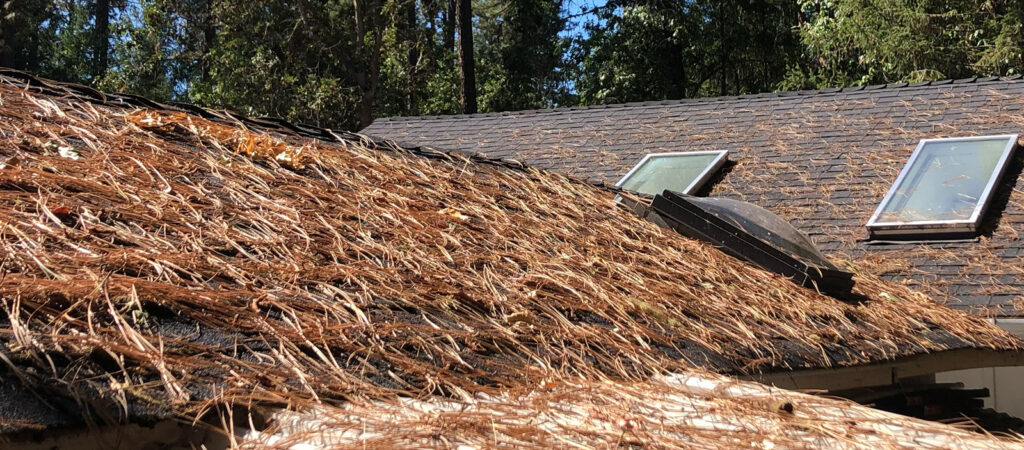
Leaves, pine needles, and dirt don’t just clog gutters — they also collect on roof valleys and edges. When debris sits on shingles, it holds moisture and accelerates wear, especially in shaded areas common throughout Southern Oregon.
Uneven Drying After Rain
If sections of your roof remain wet long after rainfall, it may indicate organic buildup interfering with proper drainage. This lingering moisture often precedes moss growth and is a big reason why roof moss is so typical in southern Oregon.
Reduced Curb Appeal
Even without moss, a dirty roof can make an otherwise well-maintained home look neglected, especially from farther back or from the air (drone photos). Many homeowners choose roof cleaning as a preventative step before listing their home or scheduling exterior maintenance.
How Roof Cleaning Helps Prevent Moss and Leaks
Professional roof cleaning removes the organic material that moss feeds on. By eliminating dirt, algae, and debris early, cleaning reduces moisture retention and makes it harder for moss to take hold.
Clean roofs also:
- shed water more efficiently
- reduce the risk of shingle edge deterioration
- support healthier gutter drainage
- lower the likelihood of hidden leaks forming near the roof edges
This preventative role is why roof cleaning often complements services like gutter cleaning and proactive moss prevention rather than replacing them.
Roof Cleaning vs. Moss Removal (What’s the Difference?)
Roof cleaning and moss removal serve different purposes, though they often work best together.
- Roof cleaning focuses on removing surface debris, dirt, algae, and light organic buildup.
- Moss removal targets established moss growth, including roots embedded in shingles.
Homeowners sometimes skip early roof cleaning and go straight to moss removal, but this usually means more aggressive treatment is needed later. Understanding the distinction helps explain why many professionals recommend cleaning before moss becomes visible.
When Roof Cleaning Is Especially Important in Southern Oregon
Local climate plays a major role in roof health. In Southern Oregon, roof cleaning becomes especially important when:
- homes are surrounded by trees
- roof slopes face north or receive limited sunlight
- gutters clog frequently
- roofs stay shaded or damp for long periods
These conditions mirror the same factors that drive moss growth, which is why early cleaning is often part of a long-term roof care strategy.
How Often Should a Roof Be Cleaned Without Moss?
There’s no one-size-fits-all schedule, but general guidance includes:
- every 2–3 years for roofs with moderate exposure
- more frequent cleaning for shaded or tree-covered homes
- inspections after heavy storm seasons
Homeowners focused on longevity often coordinate roof cleaning with seasonal inspections outlined in this roof maintenance calendar.
Why Professional Roof Cleaning Matters
Improper cleaning methods can damage shingles, strip granules, or void warranties. Professional roof cleaning typically uses low-pressure techniques designed to protect roofing materials while still removing organic buildup.
This is why professional cleaning is often paired with soft washing methods rather than pressure washing (more details in this article about soft washing vs. pressure washing a roof).
Final Takeaway
Your roof doesn’t need visible moss to require a cleaning. Dirt, algae, and debris can quietly affect roof performance long before moss appears. Regular cleaning helps prevent moisture buildup, slows moss growth, and supports long-term roof health.
Addressing roof cleanliness early is one of the simplest ways to protect your investment and avoid more intensive treatments later.
FAQs
-
Yes. Dirt, algae, and organic debris can still hold moisture on the roof surface, which contributes to shingle deterioration and increases the risk of future moss growth.
-
Common signs include dark streaks or discoloration, debris collecting on roof valleys or edges, uneven drying after rain, and a generally dirty appearance even without visible moss.
-
No. Roof cleaning removes surface dirt, algae, and debris, while moss removal targets established moss growth and roots embedded in shingles. Cleaning is often preventative, while moss removal is corrective.
-
Most roofs benefit from cleaning every 2–3 years, though shaded or tree-covered homes may need more frequent service depending on exposure and moisture retention.