What Happens When You Don’t Clean Your Solar Panels?
Key Takeaways
- Dirty solar panels gradually reduce energy production by blocking sunlight from reaching photovoltaic cells.
- Performance loss may not be immediately noticeable, but even small reductions compound over time.
- Uneven dirt buildup can create “hot spots,” increasing stress on individual solar cells.
- Long-term neglect may contribute to surface staining, mineral deposits, and potential warranty complications.
- Regular cleaning helps protect energy output, extend system lifespan, and maintain return on investment.
Solar panels are designed to withstand the elements — rain, wind, heat, and even snow. Because of that durability, many homeowners assume they’re completely maintenance-free. But while solar systems are built to last, they are not immune to the effects of dirt, dust, pollen, and environmental buildup.
In Southern Oregon, seasonal pollen, summer dust, and occasional wildfire smoke can leave a fine layer of residue on panel surfaces that rain alone doesn’t fully remove. Over time, if you don’t clean your solar panels, you may see reduced energy production, increased strain on your system, and potentially a shortened lifespan.
As part of the complete guide to cleaning your solar panels, understanding what actually happens when panels aren’t cleaned helps homeowners protect their investment and maintain consistent performance year after year.
Gradual Loss of Energy Production
The most immediate consequence of dirty solar panels is reduced energy output.
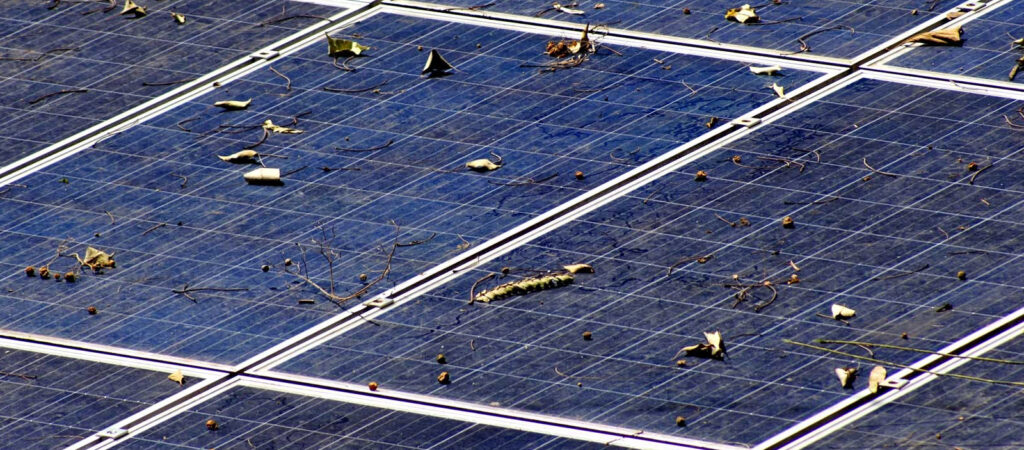
Solar panels work by absorbing sunlight through photovoltaic (PV) cells. When dirt, pollen, bird droppings, ash, or debris accumulate on the surface, they block sunlight from reaching those cells efficiently.
Over time, this can lead to:
- Reduced daily energy generation
- Lower system efficiency
- Increased reliance on grid power
- Slower return on investment
In areas like Southern Oregon — where pollen, wildfire ash, and seasonal dust are common — buildup can accumulate faster than homeowners expect.
The decline in output is often gradual, which makes it easy to overlook until energy bills or monitoring apps show noticeable changes.
Uneven Performance and “Hot Spots”
Dirt buildup isn’t always uniform. One corner of a panel may be shaded by debris while the rest remains relatively clear. This uneven exposure can create what’s known as hot spots.
Hot spots occur when certain cells overheat because part of the panel is obstructed. Over time, this imbalance can:
- Reduce panel efficiency
- Cause localized stress on photovoltaic cells
- Lead to premature wear
While modern systems include safeguards, persistent obstruction can still affect long-term performance.
Increased Strain on the System
When solar panels produce less energy due to obstruction, the entire system may need to work harder to meet household demand.
While the panels themselves aren’t “working harder” in a mechanical sense, the system compensates by:
- Pulling more power from the grid
- Cycling more frequently
- Reducing expected performance benchmarks
For homeowners monitoring solar production through an app or inverter system, performance inconsistencies can become more noticeable over time.
Potential Warranty Complications
Many homeowners are surprised to learn that maintenance expectations may be outlined in manufacturer warranties.
If panels are allowed to accumulate excessive buildup for years, manufacturers could argue that neglect contributed to performance degradation. While warranties don’t typically require constant cleaning, they often assume reasonable maintenance.
Failing to clean panels over extended periods may complicate:
- Performance warranty claims
- Output guarantees
- Long-term coverage discussions
Even if warranty voidance is rare, maintaining panels helps avoid gray areas if issues arise later.
Long-Term Surface Damage
Rain alone is not always enough to clean solar panels — especially in dry seasons or after wildfire smoke events.
When dirt combines with moisture and heat, it can create stubborn residue that adheres to the glass surface. Over extended periods, this buildup can:
- Etch into protective coatings
- Leave mineral deposits
- Cause staining that becomes harder to remove
Routine cleaning helps prevent contaminants from bonding permanently to the panel surface.
Reduced Return on Investment
Solar panels are a long-term investment. Most homeowners install them with the expectation of decades of energy savings.
If energy output drops 7–30% (up to 50% in the Middle East) due to preventable buildup, the financial impact compounds over time.
Even small, consistent losses can:
- Extend the system’s payback period
- Reduce total lifetime savings
- Diminish overall system efficiency
Maintaining panel cleanliness helps ensure the system performs closer to its designed capacity.
When “Doing Nothing” Is Most Risky
Not every home requires frequent solar panel cleaning. However, certain conditions increase the risk of performance loss when maintenance is neglected.
Homes are more vulnerable when they have:
- Heavy pollen seasons
- Nearby trees or agricultural dust
- Frequent bird activity
- Wildfire ash exposure
- Low roof pitch that slows natural runoff
In these environments, buildup can accumulate faster than rain can naturally remove it.
The Good News (Most Issues Are Preventable)
The encouraging reality is that most consequences of dirty solar panels are gradual and preventable.
When panels are cleaned on a reasonable schedule:
- Energy production remains consistent
- Surface damage risk decreases
- Warranty concerns are minimized
- Long-term system health improves
Solar panels are built to last — but like any exterior system, they perform best with periodic care.
Protect Your Solar Performance with Professional Cleaning
Solar panels are a long-term investment — and like any investment, they perform best when properly maintained.
In Southern Oregon, pollen buildup, summer dust, bird activity, and wildfire smoke can gradually reduce output without obvious warning signs. By the time performance drops noticeably, residue may have already been impacting efficiency for months.
Professional solar panel cleaning restores surface clarity, improves light absorption, and helps maintain consistent energy production. Instead of guessing whether your system is underperforming, a proactive cleaning schedule keeps your panels operating closer to their designed capacity.
BUX Exterior Cleaning provides professional solar panel cleaning in Southern Oregon, including Medford, Ashland, Grants Pass, and surrounding Rogue Valley communities. We focus on safe, low-pressure methods designed to protect panel coatings while maximizing energy performance.
If your solar panels haven’t been cleaned in the past year — or if you’ve noticed seasonal dust, pollen, or ash buildup — now is the right time to evaluate their condition.
A simple cleaning can help protect your output, your warranty, and your long-term return on investment.
FAQs
-
Energy loss varies by environment, but dirty solar panels can lose anywhere from 5% to 20% efficiency over time, depending on dust, pollen, ash, and debris buildup.
-
Rain can remove loose dust, but it typically does not eliminate pollen residue, bird droppings, wildfire ash, or mineral deposits. In dry climates or during heavy pollen seasons, buildup can accumulate faster than rain can wash it away.
-
If buildup is left untreated for long periods, contaminants may bond to the glass surface, leading to staining or coating degradation. While rare in the short term, long-term neglect can increase this risk.
-
Yes. Reduced energy production means your system may rely more on grid power, which can increase electricity costs and reduce overall savings from your solar investment.
-
Most homes benefit from cleaning every 1–2 years, though properties exposed to heavy pollen, dust, ash, or bird activity may require more frequent maintenance.