6 Signs Your Rain Gutters Are Clogged (and How to Identify Before Damage Happens)
Key Takeaways
How to recognize early warning signs of clogged gutters
The impact of debris, leaves, and moss on water flow
Why ignoring clogs can lead to roof, siding, and foundation damage
When professional inspection is necessary
How gutter maintenance ties into roof moss prevention
Clogged gutters might seem like a minor inconvenience, but even small blockages can quickly lead to major damage.
When water can’t flow freely through your gutters, it overflows at the roof edge, causing potential damage to your roof, fascia, siding, and even your foundation. Catching problems early not only prevents costly repairs but also helps keep your roof in good condition and supports other preventative measures, like moss treatments.
Common Signs Your Gutters Are Clogged
Many of these warning signs tie back to broader gutter performance and maintenance issues. Understanding how clogs form and progress — and how they’re addressed — is a core part of a complete gutter cleaning guide, especially for homes in Southern Oregon.
1. Overflow During Rain
If water spills over the edges of your gutters during storms, it’s a clear indicator of blockages. Even partial clogs can cause water to pool at roof edges, leading to fascia damage and increased moisture that encourages moss growth.
2. Sagging or Pulling Gutters
Clogged gutters become heavy with debris and water, which can pull them away from the house or cause them to sag. Visible sagging is a major warning sign that professional cleaning or repair is needed.
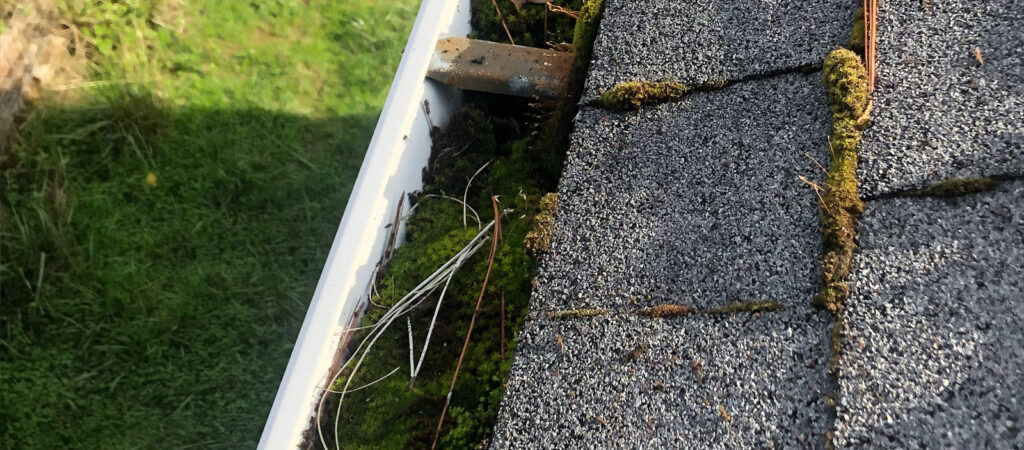
3. Plants Growing in Gutters
Moss, grass, and other small plants sprouting in your gutters indicate long-term moisture retention and organic buildup. This not only signals clogs but also increases the risk of roof moss if left untreated.
4. Debris Accumulation
If you notice a thick layer of leaves, needles, or other organic material in your gutters, it’s time for a cleaning. Debris that hasn’t moved during rain is often compacted, making it difficult for water to flow properly.
5. Water Stains or Damage
Look for water marks on your siding, foundation, or around the roofline. Water that overflows from clogged gutters can leave visible stains, cause paint deterioration, or lead to more serious structural problems.
6. Pests or Nesting
Clogged gutters create an inviting environment for birds, insects, and rodents. If you see nests or increased pest activity around gutters, it may indicate standing water and debris accumulation.
Gutter Guards and Clogged Gutters (What to Know)
Gutter guards can reduce how often debris builds up, but they don’t make gutters maintenance-free. In Southern Oregon, pine needles, moss fragments, and fine debris can still slip past guards or accumulate on top of them, restricting water flow without obvious signs from the ground.
In many cases, homeowners assume guards are working properly while clogs quietly develop underneath. Understanding the real-world performance of gutter guards, including their limitations and ongoing maintenance needs, helps prevent surprise overflows and water damage later on.
When to Call a Professional
At this point, it’s less about routine maintenance and more about preventing damage.
When gutters show advanced warning signs, bringing in an experienced gutter cleaning company (like BUX) ensures the problem is addressed safely, thoroughly, and before it affects your roof, siding, or foundation.
While some homeowners may feel comfortable doing minor cleaning themselves, certain signs warrant a professional inspection:
-
Persistent overflow even after minor DIY cleaning
-
Roofline or fascia damage
-
Significant moss or plant growth in gutters
-
Multi-story homes or steep roof slopes
For step-by-step guidance on DIY versus professional gutter maintenance, check out our DIY Gutter Cleaning vs Professional Service article.
How Early Detection Supports Roof Health
Catching gutter issues early doesn’t just protect drainage — it plays a direct role in overall roof health. According to guidance from roofing manufacturers like GAF, prolonged moisture exposure at roof edges can accelerate material wear and shorten roof lifespan when drainage problems go unchecked.
Noticing the early signs of clogged gutters allows you to:
-
Maintain proper water drainage
-
Reduce roof moss growth by keeping edges dry
-
Extend the lifespan of your roof and gutters
-
Avoid costly repairs to the foundation, siding, and fascia
Regular inspection and cleaning are especially important for Southern Oregon homes with heavy tree coverage, shaded roofs, or older gutters.
Schedule a Gutter Inspection Before Damage Starts
If you’re noticing any of these warning signs — or if it’s been a while since your gutters were last cleaned — a professional inspection can catch issues before they turn into costly repairs. Proper gutter cleaning protects your roof, siding, foundation, and landscaping, especially during Southern Oregon’s wet seasons.
If you’d like a free quote or on-site evaluation, contact BUX Exterior Cleaning today. We’ll assess your gutters, identify problem areas, and recommend the right solution to keep water flowing safely away from your home.
Final Takeaway
Clogged gutters rarely fix themselves. By watching for signs like overflow, sagging, plant growth, or pests, homeowners can catch issues early and protect their home’s roof, siding, and foundation.
Proactive maintenance keeps gutters flowing freely, prevents moss growth, and saves money in the long run.
FAQs
-
Common signs include water overflowing during rain, sagging gutters, plants or moss growing in the gutters, debris accumulation, water stains on siding or foundation, and pest activity around the gutters.
-
Yes. When gutters are clogged, water can pool at the roof edge, leading to roof leaks, moss growth, and damage to fascia, siding, and even the foundation.
-
Look for water spilling over the edges during rain, sagging gutters, visible debris from the ground, water stains on the home, or unusual pest activity near gutters.
-
Minor debris may be handled with DIY cleaning, but multi-story homes, heavy tree coverage, or persistent signs of clogging usually require professional service.
-
Most Southern Oregon homes benefit from inspections at least twice per year — typically in the spring and fall — or more frequently for homes with heavy tree coverage or shaded rooflines.