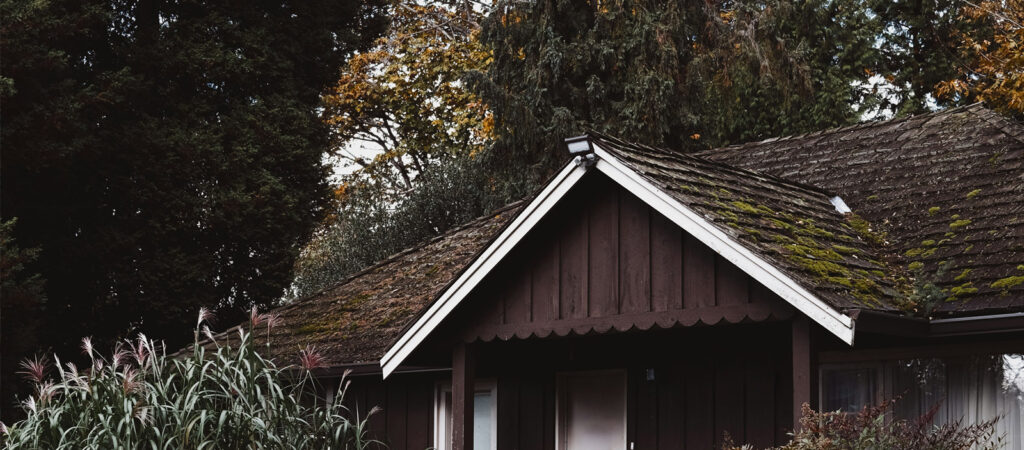
Native Trees and Roof Moss (Managing the Overhanging Branches)
Key Takeaways
- Overhanging branches create shade, debris, and moisture that promote moss growth.
- Maples, oaks, Douglas firs, and pines are the most common culprits in the Rogue Valley.
- Maintaining 6–10 feet of clearance reduces moss risk significantly.
- Regular debris removal and gutter maintenance complement pruning efforts.
- Large or hard-to-reach branches should be handled by professional arborists.
- Combine branch management with inspections, removal, and preventive treatments for best results.
Overhanging tree branches that extend over your roof increase shade, trap moisture, and drop leaves and needles, all of which create ideal conditions for moss to grow. Managing overhanging branches is a key part of keeping your roof healthy in Southern Oregon.
However, although tree management and pruning can help reduce moss growth, sometimes moss has already established itself or covers areas that are hard to reach safely.
For homeowners in Southern Oregon who want a thorough, worry-free solution, BUX provides roof moss removal services with expert care — gently removing moss while protecting shingles, gutters, and landscaping.
Why Overhanging Branches Promote Roof Moss
Overhanging branches increase the risk of moss in three main ways:
-
Shade: Moss thrives in cool, damp areas. Branches block sunlight, especially on north-facing slopes, preventing shingles from drying completely after rain or dew.
-
Organic Debris: Leaves, needles, seeds, and small twigs accumulate in roof valleys and gutters. As this debris decomposes, it retains moisture and provides nutrients that help moss take hold.
-
Prolonged Dampness: Branches can trap water on the roof, extending damp periods even after sunny days. Moist, shaded areas are perfect for moss growth.
The Oregon State University Extension notes that shaded, debris-laden areas on roofs are highly prone to biological growth.
Which Native Trees Contribute the Most to Moss Growth?
Some trees are more likely to cause roof moss in Southern Oregon:
-
Maples (Acer spp.) – Broad leaves block sunlight and produce heavy fall debris.
-
Oaks (Quercus spp.) – Large, dense canopies keep roofs shaded for long periods.
-
Douglas Fir (Pseudotsuga menziesii) – Needles drop year-round, creating continuous moisture retention.
-
Pines (Pinus spp.) – Acidic needles decompose slowly, prolonging damp conditions and increasing moss risk.
Knowing which trees overhang your roof helps you prioritize pruning and preventive strategies.
Safe Methods to Manage Overhanging Branches
Proper tree management protects both your roof and the tree itself. Here’s how tree management plays it’s role in roof moss prevention:
1. Regular Pruning
-
Remove branches that directly overhang the roof.
-
Maintain 6–10 feet of clearance where possible.
-
Prune in late winter or early spring to reduce stress on the tree.
-
Avoid cutting more than 25% of a tree’s canopy at once to maintain its health.
2. Debris Control
-
Keep gutters and valleys clear of leaves and needles.
-
Consider gutter guards to reduce buildup and water backup.
-
Regular roof inspections help catch debris before it promotes moss growth.
3. Professional Arborist Assistance
-
Large trees, high limbs, or difficult-to-reach branches should be handled by certified arborists.
-
Professionals can prune safely, assess tree health, and prevent damage to your roof.
Additional Preventive Measures for Moss Growth
Even with proper branch management, moss can still appear. Combine tree care with other preventive strategies:
-
Zinc or copper strips along roof ridges to inhibit moss growth.
-
Regular roof inspections every 12–18 months.
-
Prompt moss removal when small patches appear, before they spread.
Why This Matters for Southern Oregon Homes
The Rogue Valley’s mild, wet winters and shaded neighborhoods make overhanging branches a common contributor to roof moss. Homes with large maples, oaks, or Douglas firs nearby are particularly vulnerable.
Managing these branches isn’t just about aesthetics — it reduces moisture retention, protects shingles, and extends roof lifespan. Combined with regular inspection and proper moss removal, it’s one of the most effective long-term prevention strategies.
FAQs
-
Branches should be 6–10 feet away to reduce shade, moisture, and debris accumulation.
-
No. Pruning reduces risk, but regular inspections, debris removal, and preventive treatments are still needed.
-
Only if you have the experience and equipment. For large or high branches, hiring a professional arborist is safest.
-
At least once per year, ideally before the wet season, to minimize moss growth.
-
Yes, if branches fall or tools scrape shingles. Proper technique or professional help prevents accidental damage.