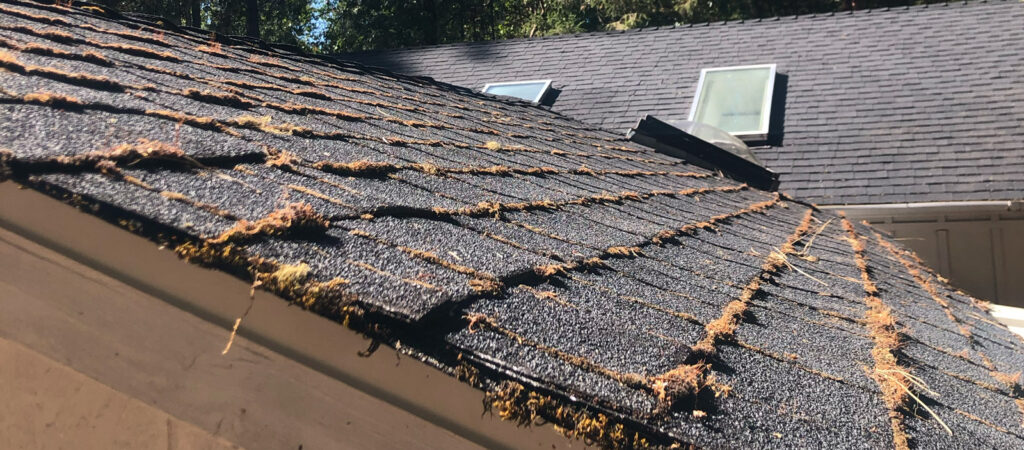
Does Moss Cause Roof Leaks? How Moss Turns Moisture Into Water Damage
Key Takeaways
Whether roof moss directly causes leaks or contributes over time
How moss changes moisture behavior on your roof
Why leaks often show up long after moss first appears
Where moss-related leaks most commonly start
How early moss removal helps prevent costly water damage
Roof moss is often dismissed as a cosmetic issue—something to deal with “eventually.” But one of the most common questions we hear at BUX Exterior Cleaning is whether moss can actually cause roof leaks. Homeowners are often surprised when a small leak appears, only to realize moss has been growing quietly on the roof for years.
Moss doesn’t punch holes through shingles or create instant leaks. Instead, it causes a slow chain reaction that changes how moisture behaves on your roof.
Over time, that trapped moisture weakens roofing materials, disrupts water flow, and creates the perfect conditions for leaks to develop—often without obvious warning signs.
Understanding how moss leads to leaks helps homeowners make smarter decisions about maintenance and timing, especially after getting familiar with our guide to moss removal and prevention.
How Moss Leads to Roof Leaks
Roof leaks caused by moss don’t usually happen overnight. Instead, moss creates a slow, compounding set of conditions that weaken your roofing system over time.
While moss may look harmless at first, its ability to hold moisture, lift materials, and interfere with drainage makes leaks far more likely—especially in damp climates like the Rogue Valley.
Below are the most common ways moss creates the conditions that allow water to penetrate your roof.
Trapped Moisture Against Shingles
One of the reasons moss is so bad for roofs is its ability to hold water like a sponge. Moss stays damp long after rain has stopped, keeping shingles wet for extended periods.
-
Prolonged moisture prevents shingles from drying properly
-
Constant dampness accelerates material breakdown
-
Wet conditions encourage rot and decay beneath the surface
Over time, this trapped moisture compromises the protective layers of your roof, making it easier for water to seep through.
Lifted and Separated Shingle Edges
As moss grows, it expands outward and upward, often creeping beneath shingle edges. This growth can physically lift shingles out of position.
-
Raised shingles expose nail holes and underlayment
-
Wind-driven rain can push underneath lifted edges
-
Shingles lose their ability to shed water effectively
Once shingles are no longer lying flat, your roof’s first line of defense is already compromised.
Accelerated Loss of Shingle Granules
As moss roots into asphalt shingles, it dislodges the protective granules that shield them from sun and weather exposure.
-
Granule loss weakens the shingle surface
-
UV rays break down exposed asphalt more quickly
-
Shingles become brittle and prone to cracking
This deterioration doesn’t just shorten roof lifespan—it increases the chance that small openings will turn into active leaks.
Interference With Proper Drainage
Moss often grows thickest in roof valleys, around chimneys, and near gutters—exactly where water needs to flow freely.
-
Moss slows or blocks water runoff
-
Water backs up under shingles during heavy rain
-
Pooling water increases pressure on weak areas
When water can’t drain efficiently, it looks for alternative paths—and those paths often lead into your home.
Freeze-Thaw Expansion Damage
In colder months, trapped moisture within moss freezes and expands, then thaws repeatedly as temperatures fluctuate.
-
Expansion forces shingles apart
-
Cracks widen with each freeze-thaw cycle
-
Small separations become permanent gaps
These are just some of the risks of roof moss growth that can cause seasonal stress and turn minor moss issues into serious structural vulnerabilities.
Hidden Damage Beneath the Roof Surface
Perhaps the most concerning issue with roof moss is what you can’t see. By the time moss growth is visible, damage may already be happening below the shingles.
-
Moisture can rot the decking and underlayment
-
Leaks may develop far from visible moss patches
-
Interior damage often appears long after exterior warning signs
This hidden deterioration is why many homeowners don’t realize moss is causing leaks until water stains show up inside.
Why Moss-Related Leaks Take Time to Show Up
Unlike storm damage or punctures, moss-related leaks develop gradually.
-
Damage accumulates over seasons, not days
-
Dry periods may temporarily hide symptoms
-
Interior signs often lag behind exterior damage
This slow progression is why moss is so often underestimated—and why early removal matters.
Where Moss-Related Leaks Most Commonly Start
From experience, moss-related leaks tend to originate in predictable areas:
-
Shaded roof sections with persistent moss growth
-
Valleys where water naturally concentrates
-
Around flashing, vents, skylights, and chimneys
-
Roof edges where moss traps debris
These areas already experience higher moisture exposure, and moss amplifies that stress.
Why Southern Oregon Roofs Are Especially Vulnerable
Homes in the Rogue Valley face unique conditions.
-
Seasonal rain and morning dew increase moisture exposure
-
Tree cover limits sunlight and drying time
-
Cooler temperatures slow evaporation
These factors make moss growth more common—and more damaging—if left untreated.
How Moss Removal Helps Prevent Leaks
Breaking the chain reaction is the key to leak prevention.
-
Proper moss removal allows shingles to dry properly
-
Water flow is restored to its intended path
-
Treatments help slow regrowth and reduce moisture retention
Professional moss removal focuses on protecting the roof, not just improving appearance.
Why Early Action Matters
Addressing moss early plays a critical role in protecting your roof and keeping long-term costs under control. When moss is removed before it becomes established, it helps:
-
Reduce prolonged moisture exposure that accelerates shingle deterioration
-
Preserve shingle integrity by preventing lifting, granule loss, and separation
-
Stop small vulnerabilities from turning into active leaks
Timing also matters. Moss is far easier—and less expensive—to remove when it’s addressed during the right seasons, before wet weather or temperature swings intensify the damage.
Choosing the best time for roof moss cleaning allows treatments to work more effectively and helps minimize stress on your roofing materials.
Once leaks begin, repairs are far more complex and costly than routine maintenance. In comparison, proactive moss removal is a modest investment that helps extend roof life, avoid emergency repairs, and protect the home as a whole.
Once leaks begin, repairs are more complex and expensive than simple maintenance. Ultimately, the cost to remove moss is worth the price.
So, does roof moss cause leaks? Not immediately—but over time, moss creates the conditions that make leaks far more likely.
By trapping moisture, weakening shingles, and disrupting water flow, moss turns small vulnerabilities into water damage. Addressing choosing one of these moss removal options early helps protect your roof, your home, and your long-term investment.
FAQs
-
Yes. Moss acts like a sponge, absorbing and holding moisture against your shingles long after rain has stopped. This constant dampness accelerates shingle deterioration and increases the likelihood of water penetrating the roofing system over time.
-
Moss often grows underneath shingle edges, not just on the surface. As it expands, it can lift and separate shingles, exposing nail holes and underlayment—making it easier for wind-driven rain to enter your roof.
-
Moss roots into asphalt shingles and loosens the protective granules that shield them from sun and weather exposure. Once granules are lost, shingles degrade more quickly, become brittle, and are more likely to crack or leak.
-
Yes. Moss commonly grows in valleys, near chimneys, and along gutters—areas critical for proper drainage. When moss slows or blocks water flow, rainwater can back up under shingles and increase the risk of leaks.
-
It can. Moss holds moisture that freezes and expands during cold weather, then contracts as it thaws. This repeated freeze-thaw cycle can force shingles apart, widen cracks, and create permanent gaps where water can enter.
-
Absolutely. Moss can trap moisture beneath shingles and damage the underlayment or roof decking long before leaks appear inside your home. By the time interior signs show up, the underlying damage is often more advanced.
-
Removing moss is an important first step, but it’s not always the whole solution. A professional cleaning should also assess shingle condition, drainage areas, and any existing damage to ensure moss-related leak risks are fully addressed.
-
In moss-prone areas like Southern Oregon, roofs should be inspected at least once a year, especially after the rainy season. Early detection helps prevent moss from creating long-term leak conditions.