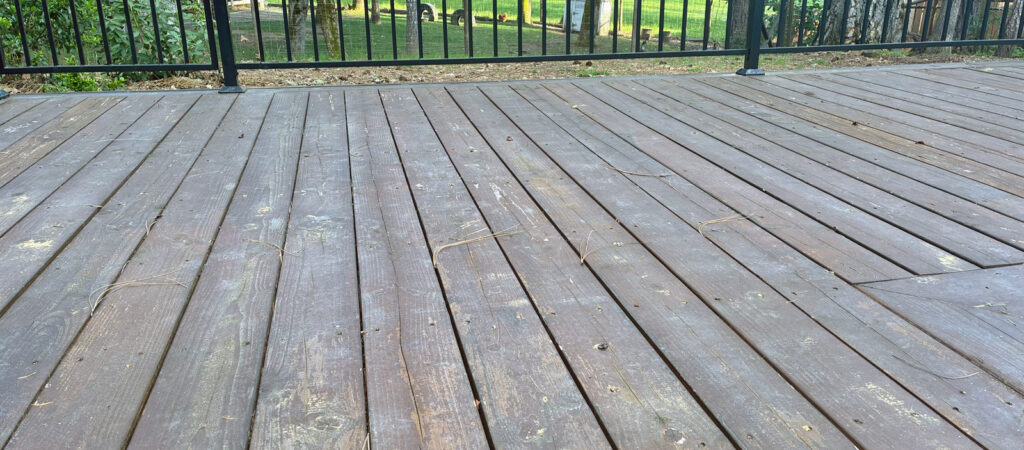
Deck Cleaning – When to Use Pressure vs. Soft Wash (and How to Avoid Damage)
Key Takeaways
Decks should not be cleaned the same way as concrete or other hard surfaces.
Too much pressure can raise wood grain, splinter fibers, strip stain, and leave visible marks.
Cedar, pressure-treated lumber, and composite decking do not all respond the same way.
A softer cleaning approach is often better when the deck has finish sensitivity, weathering, or older wood.
The cleaning method should depend on the material, condition, and whether staining or sealing is planned afterward.
The goal is not just to make the deck look cleaner, but to do it without creating extra damage or prep work.
Decks take a lot of wear in Southern Oregon. They sit through wet months, dry heat, tree debris, pollen, dust, and plenty of foot traffic. Over time, that can leave wood and composite surfaces looking dull, dirty, weathered, or slick. But while deck cleaning is important, it is also one of the easiest exterior cleaning jobs to get wrong.
That is because decks are not like driveways. Wood fibers, stain finishes, and composite materials can all react badly to too much pressure or the wrong cleaning approach. A deck may come out looking cleaner at first, but still end up rougher, splintered, striped, or harder to refinish later.
This guide explains when pressure washing a deck makes sense, when a softer approach is safer, and how homeowners can avoid turning a cleaning job into surface damage.
Why Deck Cleaning Needs More Caution Than Most Exterior Washing
A deck may look like a simple outdoor surface, but it is much less forgiving than concrete, stone, or many patios. That is because decks are made from materials that have fibers, finishes, edges, and wear patterns that can be affected quickly by aggressive cleaning.
A driveway can often handle a stronger approach with fewer cosmetic consequences. A wood deck cannot. Even when the surface is dirty, weathered, or stained, the wrong pressure can make the deck:
- rougher to the touch
- visibly striped
- splintered
- fuzzy or raised-grain
- unevenly stripped
- more difficult to stain evenly later
That is why deck cleaning should always start with the material and surface condition, not just the idea that “pressure washing” is the solution.
What Builds Up on Decks in Southern Oregon
Decks in Southern Oregon collect a specific mix of buildup depending on their location, tree cover, shade, and how much they are used.
Common deck issues include:
- dust and dry-season film
- pollen
- leaf debris
- algae or mildew in shaded areas
- food and drink residue
- darker weathering
- slipperiness in low-sun areas
- general dullness from exposure and age
Decks under trees or in shaded backyards often collect buildup faster than more exposed decks. Covered decks may stay cleaner in some ways, but can still collect webs, grime, and uneven weathering.
Pressure Washing a Deck: When It Can Make Sense
Pressure washing is not automatically wrong for decks. In the right situation, it can help remove buildup and improve appearance. But the key is that deck cleaning should be controlled and surface-aware, not treated like a hardscape blast job.
Pressure washing may make sense when:
- the deck is structurally sound
- the surface is heavily dirty or weathered
- algae or grime buildup is visible
- the wood can handle careful cleaning
- the cleaning is part of a refinishing plan
- the technique is appropriate for the material
The problem is not the idea of pressure itself. The problem is using too much of it, using the wrong angle, or cleaning without understanding how the material responds.
When Soft Washing or a Gentler Approach Is Safer
A gentler cleaning approach is often safer when the deck material is more vulnerable, the finish is inconsistent, or the goal is maintenance rather than aggressive prep.
Soft washing or lower-pressure cleaning often makes more sense when:
- the wood is older or weathered
- the deck has a stain or sealer you do not want to strip unevenly
- the deck is made from softer wood
- the surface already shows wear
- you want to clean grime without roughing up the boards
- the deck includes composite materials
In many cases, the deck does not need more force. It needs a method that removes buildup without damaging the top layer of the material.
Cedar vs Pressure-Treated vs Composite: Why Material Matters
One of the biggest mistakes homeowners make is assuming all deck boards can be cleaned the same way. They cannot.
Cedar Decks
Cedar is popular because it looks good and performs well, but it can also be easy to damage if cleaned too aggressively.
Common cedar concerns include:
- raised grain
- fuzzing
- splintering
- uneven surface texture
- finish wear
Cedar often benefits from a more careful cleaning approach, especially if appearance matters or refinishing is planned.
Pressure-Treated Lumber
Pressure-treated decks can be a little more forgiving than cedar in some situations, but they are still wood. That means they can still be scarred, striped, or roughened if the pressure is too strong or the technique is poor.
A deck being made from pressure-treated lumber does not mean it should be treated like concrete.
Composite Decking
Composite decking introduces a different set of concerns. While it does not splinter like wood, it can still be damaged, marred, or cleaned unevenly if the wrong method is used.
Composite decks are often more about surface care and manufacturer-sensitive cleaning than aggressive force. Homeowners who assume composite can handle anything sometimes end up leaving marks or reducing the clean, even finish they wanted.
The Biggest Deck Cleaning Mistakes Homeowners Make
Deck cleaning problems are often caused by technique rather than intent. A homeowner may be trying to help the deck, but still create more work in the process.
Using Too Much Pressure
This is the most common issue. Too much pressure can:
- gouge wood
- raise grain
- splinter board surfaces
- leave wand marks
- strip stain unevenly
Once that happens, the deck may need extra sanding or prep before it looks right again.
Holding the Spray Too Close
Even if the machine itself is not oversized, getting too close to the surface can intensify the effect and leave obvious marks or surface damage.
Cleaning Against the Board in a Way That Leaves Lines
Deck surfaces tend to show inconsistent technique quickly. Uneven passes, lingering in one spot, or poor motion control can leave the boards looking patchy or striped.
Treating an Old Deck Like a New One
Older wood, tired stain, weathered boards, and repaired sections often react differently than newer decking. What a newer deck might tolerate visually, an older one may not.
Ignoring the Finish Plan
A deck that is being cleaned for regular maintenance should not be approached the same way as a deck being prepped for sanding, staining, or refinishing.
That distinction matters more than many homeowners realize.
Raised Grain, Furring, and Splintering: What Damage Actually Looks Like
A lot of deck-cleaning damage is not dramatic at first. It may not look like a “broken” deck. Instead, it often shows up as a surface-quality problem.
Raised Grain
Raised grain happens when the wood fibers are lifted during aggressive cleaning. The deck may look cleaner but feel rougher and less finished.
Furring
Furring is a fuzzy, fiber-lifted effect that often shows up after over-aggressive cleaning, especially on softer wood. It can make the deck look worn even right after it was cleaned.
Splintering or Surface Scarring
Sometimes the pressure is strong enough to damage the top surface more visibly, leaving marks or rough areas that make the deck less pleasant to use and harder to restore evenly.
Deck Cleaning Before Staining or Sealing
Cleaning is often part of a larger deck-maintenance plan. If staining or sealing is coming next, the method matters even more.
A deck that has been cleaned too aggressively may need:
- extra drying time
- sanding
- surface correction
- more prep before finish work
- extra care to avoid uneven stain absorption
In other words, a deck can be “clean” and still be less ready for finishing than it should be.
That is why prep cleaning should be aimed at getting the deck ready, not just getting it as aggressively blasted as possible.
Algae and Slippery Deck Buildup
One of the most practical reasons to clean a deck is safety. Algae, mildew, and organic buildup can make certain areas feel slick, especially where sun is limited and moisture lingers.
This is especially common on:
- shaded decks
- north-facing exposures
- decks under trees
- edges near planters or landscaping
- boards that stay damp longer
Cleaning can help reduce this slickness, but the method still has to protect the surface itself.
How Often Should a Deck Be Cleaned?
There is no single deck-cleaning schedule that fits every home. Some decks need more frequent attention because of shade, tree cover, moisture, and use. Others stay relatively clean for longer stretches.
Many decks make sense to clean:
- every 1 to 2 years
- before staining or sealing
- when visible buildup becomes noticeable
- when the surface starts feeling slick or looking weathered
For more on surface-by-surface timing, see How Often Should You Clean Exterior Surfaces in the Rogue Valley?.
Best Time of Year to Clean a Deck in Southern Oregon
Deck cleaning is often most practical in spring or early summer, especially when homeowners are getting outdoor spaces ready for use again.
That timing often makes sense because:
- winter grime has built up
- algae becomes more noticeable
- outdoor entertaining season is starting
- refinishing projects are more likely to happen
- decks are being used more regularly again
For more on timing, see Best Time of Year to Pressure Wash or Soft Wash in Southern Oregon.
DIY Deck Cleaning vs Hiring a Pro
Deck cleaning is one of the areas where DIY can create expensive-looking results even when no major structural damage happens. A rough, striped, or splintered deck may still technically be standing, but it can look worse and require more work afterward.
DIY is most likely to go wrong when:
- the deck is older
- the wood is softer
- staining or sealing is planned next
- the finish is already uneven
- the homeowner treats the deck like a driveway
If you are comparing the two, see Should You Rent a Pressure Washer or Hire a Pro in Southern Oregon?.
Deck Cleaning vs Fence Cleaning
Decks and fences are both wood surfaces, but they do not always behave the same way. Decks take foot traffic, often show surface damage more clearly, and are more likely to be part of a larger refinishing plan.
Fences may have some similar cleaning risks, but the finish goals and wear patterns are different.
For more on wood fencing, read Fence Washing: Cedar, Pressure-Treated, and Stained Fences.
Need Deck Cleaning in Southern Oregon?
If your deck is looking weathered, dirty, slippery, or ready for maintenance, cleaning can make a big difference. The key is using the right approach for the material and condition instead of assuming high pressure is always the answer.
At BUX Exterior Cleaning, we help Southern Oregon homeowners clean wood and composite decks based on the material, finish condition, and type of buildup involved. Whether the deck needs a more careful maintenance wash or cleaning ahead of future finish work, the goal is cleaner results without unnecessary surface damage.
If you need pressure washing services in Southern Oregon, contact BUX Exterior Cleaning or call 541-414-6996.
FAQs
-
Yes, but it must be done carefully. Too much pressure can raise the grain, splinter the wood, and leave visible marks.
-
In many cases, yes. A softer approach is often safer for older wood, stained decks, and surfaces where finish protection matters.
-
Yes. Cedar can be roughened, fuzzed, or splintered if the cleaning is too aggressive.
-
Sometimes, but composite still needs care. The wrong method can leave marks or create uneven results.
-
Many decks are cleaned every 1 to 2 years, or whenever buildup, slickness, or weathering becomes noticeable.