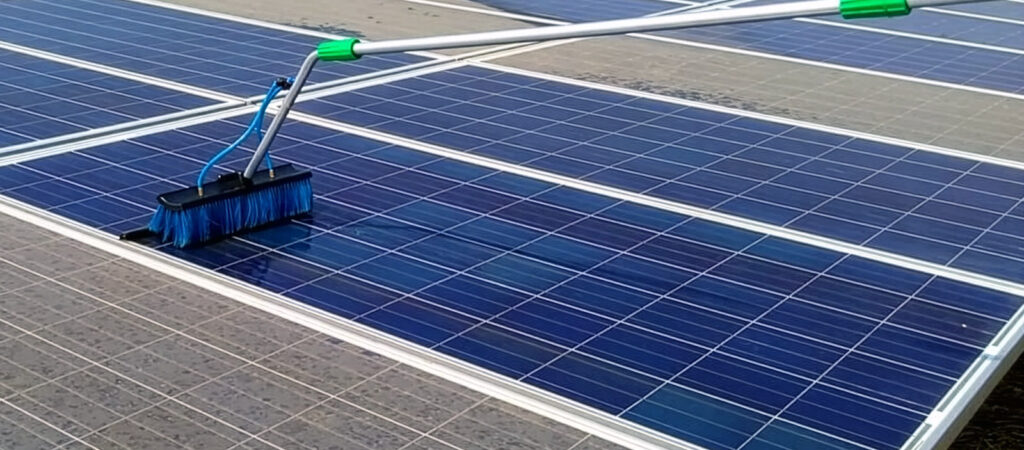
Best Time of Year to Clean Solar Panels in Southern Oregon
Key Takeaways
- Spring is the most strategic time to clean, especially after heavy pollen season and before peak summer production.
- Early fall is the second-best window, particularly after wildfire smoke and dry summer dust.
- Most Southern Oregon homes need cleaning at least once per year.
- Homes near trees, farmland, gravel roads, or wildfire zones often benefit from twice-yearly service.
- If you notice a 5–15% drop in production, visible haze, or ash buildup, don’t wait for “peak season” — clean sooner.
If you live in Southern Oregon, your solar panels face a unique mix of environmental stressors: wildfire smoke, heavy pollen, dry dusty summers, and long rainy stretches. While rain helps a little, it’s not a replacement for a proper cleaning.
So, when is the best time of year to clean solar panels in Southern Oregon?
Short answer: spring and early fall are ideal — but timing also depends on your property, tree coverage, roof pitch, and wildfire exposure.
Let’s break it down season by season.
Spring (The Most Important Cleaning Window)
Spring is typically the most critical time to clean solar panels in Southern Oregon.
After months of winter rain, debris accumulation, and reduced sunlight, your system is about to enter peak production season. Cleaning in spring ensures you maximize energy output during the long, high-sun months ahead.
Why spring works best:
- Removes built-up winter grime and residue
- Clears heavy pollen (especially in tree-dense areas like Medford and Ashland)
- Prepares panels for high-production summer months
- Identifies minor issues before peak generation season
In many cases, homeowners see a noticeable production bump after a spring cleaning — especially if panels haven’t been serviced in over a year.
If you do only one cleaning per year, spring is usually the smartest choice.
Summer (High Production, High Risk)
Summer in Southern Oregon means long days, strong sun, and maximum solar production. It’s also when dirt accumulation can hurt you the most financially.
However, it’s not always the ideal time to clean.
Challenges with summer cleanings:
- Panels get extremely hot (risk of thermal shock if cleaned improperly)
- Wildfire smoke and ash can quickly re-coat panels
- Safety risks increase on hot roofs
That said, summer cleaning can make sense if:
- Your system shows a noticeable production drop
- You experienced heavy smoke exposure
- You see visible ash or dust buildup
If you choose summer cleaning, timing matters. Early morning service reduces heat stress and safety risks.
Fall (A Strategic Second Opportunity)
Early fall is another strong window for cleaning, especially after wildfire season.
Southern Oregon regularly experiences smoke events. Even if panels look clean, fine ash and particulates can reduce performance.
Why fall can be ideal:
- Removes wildfire ash and fine particulates
- Prepares panels for winter’s lower sun angles
- Addresses debris before the rainy season
If you skipped spring cleaning — or had heavy smoke exposure — fall may be your best recovery window.
For homeowners surrounded by trees, fall also helps remove sap residue and early leaf debris before it builds up.
Winter (Usually Not Necessary)
Many homeowners assume winter rain cleans solar panels naturally. While rain does remove loose dust, it rarely eliminates:
- Sticky pollen residue
- Ash buildup
- Bird droppings
- Hard water spotting
Additionally, winter cleanings can be less efficient due to:
- Shorter daylight hours
- Safety risks from wet or slick roofs
- Limited performance gains during low-production months
Unless you see severe debris buildup, winter cleaning is typically optional in Southern Oregon.
How Southern Oregon’s Climate Affects Cleaning Timing
This region isn’t like coastal California or Arizona. Southern Oregon has its own cleaning rhythm.
Key regional factors include:
- Wildfire smoke (July–September): Fine ash reduces light transmission even when panels look clean.
- Heavy spring pollen: Particularly in neighborhoods with oak, pine, or ornamental trees.
- Dry, dusty summers: Especially in rural or gravel-road areas.
- Tree coverage: Ashland and Jacksonville properties often experience more organic debris.
If your home sits near open land, farms, or forested areas, you may need cleaning more often than once per year.
How Often Should You Clean Solar Panels in Southern Oregon?
For most homeowners in Southern Oregon, the right cleaning frequency for solar panels isn’t about over-maintaining the system — it’s about protecting efficiency in a region with very specific environmental conditions.
Unlike coastal climates where rain is frequent, or desert climates where dust is constant, Southern Oregon sits in a middle ground. We get heavy spring pollen, long dry summers, periodic wildfire smoke, and months of minimal rainfall.
That combination means panels rarely stay truly clean for a full year — even if they look fine from the ground.
So what’s the practical, balanced approach?
For most homeowners, the sweet spot is:
- Once per year (minimum)
- Twice per year if you experience heavy pollen, smoke, or tree debris
Homes with steep roof pitches and minimal tree coverage may stretch longer between cleanings.
Properties in wooded areas, near gravel roads, agricultural zones, or exposed to wildfire smoke often benefit from biannual service.
If your monitoring system shows an unexplained 5–15% production dip, cleaning is often the simplest first step before assuming equipment issues.
Signs It’s Time to Clean (Regardless of Season)
Even if it’s not “peak season,” and even if you’re planning to wait until spring or fall, there are situations where delaying service simply doesn’t make sense.
Solar panels don’t follow a calendar — they respond to conditions. And when the buildup reaches a certain point, performance losses can compound quickly, especially during high-sun months.
In other words, timing matters — but visible contamination and measurable production drops matter more.
If you notice any of the following, it’s usually smarter to clean now rather than wait for the “ideal” seasonal window:
- Visible haze, ash, or streaking
- Noticeable production decline
- Bird droppings accumulating
- Uneven panel coloration
Solar panels are engineered for durability — but they aren’t immune to Southern Oregon’s dust, pollen, and smoke.
When buildup becomes obvious, waiting often costs more in lost production than the cleaning itself.
Ready to Schedule at the Right Time?
If your panels haven’t been cleaned in the past year — or you made it through a heavy pollen or smoke season — now is the right time to schedule a solar panel cleaning service with BUX.
Seasonal timing isn’t about over-maintaining your system. It’s about protecting performance during the months that matter most.
A properly timed cleaning can:
- Restore lost production
- Prevent residue from hardening on panel glass
- Protect your long-term solar investment
Southern Oregon’s climate is predictable. Your maintenance schedule should be too.
Get in touch with BUX to schedule your spring or fall cleaning now and keep your system producing at full potential.
FAQs
-
Most homes need cleaning once per year minimum. If your property is exposed to heavy pollen, wildfire smoke, or dust, twice per year is often ideal.
-
Yes — for most homeowners. Spring cleaning maximizes summer production, which is when your system generates the most electricity. Fall cleaning is excellent for removing smoke and dust after wildfire season.
-
Rain removes loose debris but typically does not remove sticky pollen, ash residue, mineral spotting, or bird droppings. Southern Oregon’s rainfall helps — but it’s not a full cleaning solution.
-
Yes. Even fine, nearly invisible ash particles can reduce light transmission. After heavy smoke events, professional cleaning can restore lost efficiency.
-
Solar panels often appear clean at street level but still have a thin film of pollen, dust, or ash that impacts performance. Monitoring data is usually a better indicator than visual inspection alone.
-
It can be — but improper DIY cleaning during hot weather increases the risk of thermal shock, streaking, or surface damage. Early morning professional cleaning is typically safest.